

 English
 中文简体
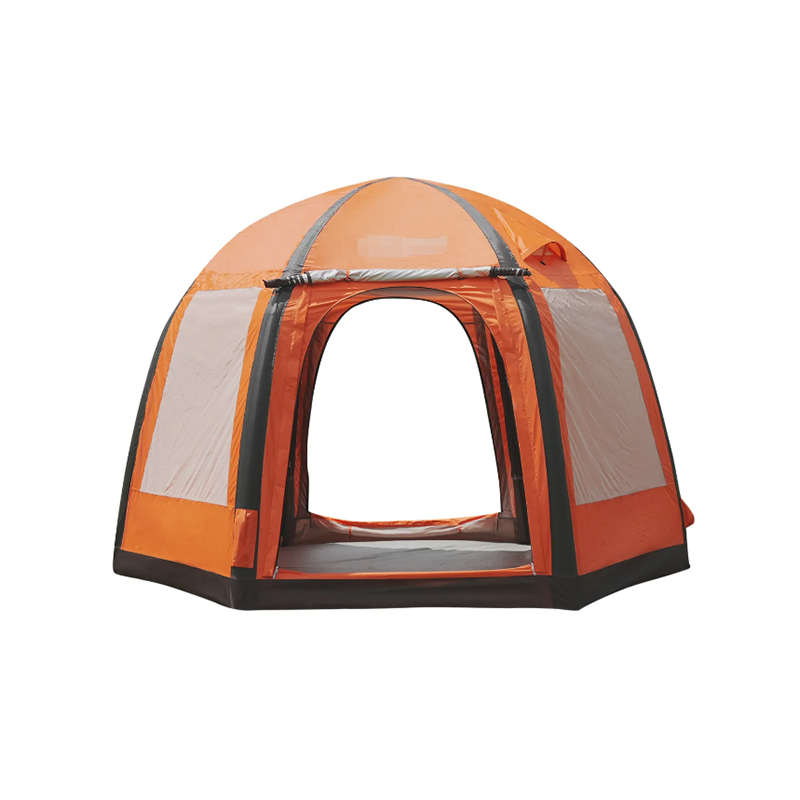
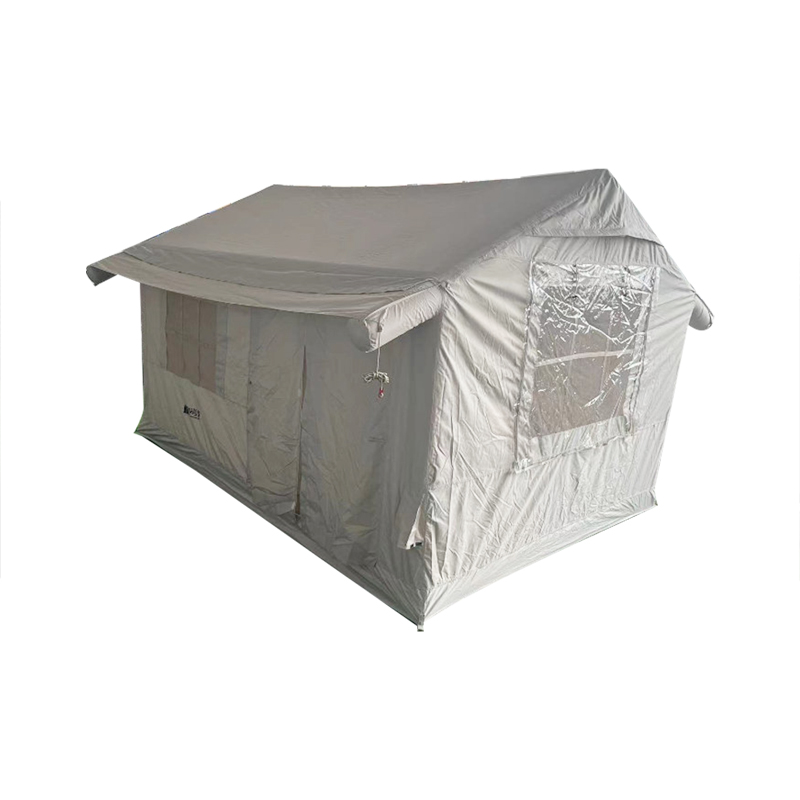
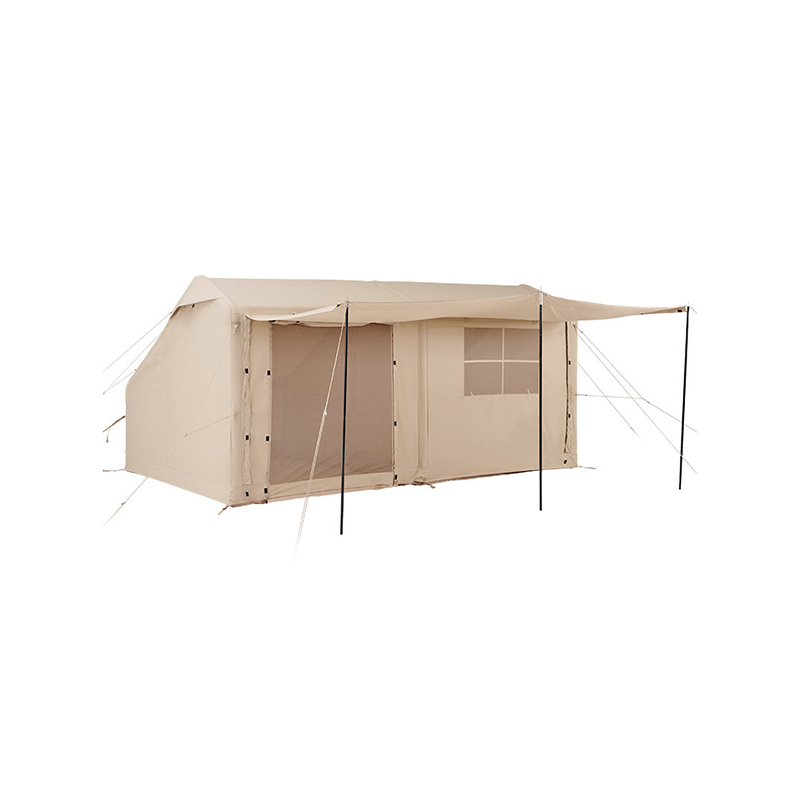
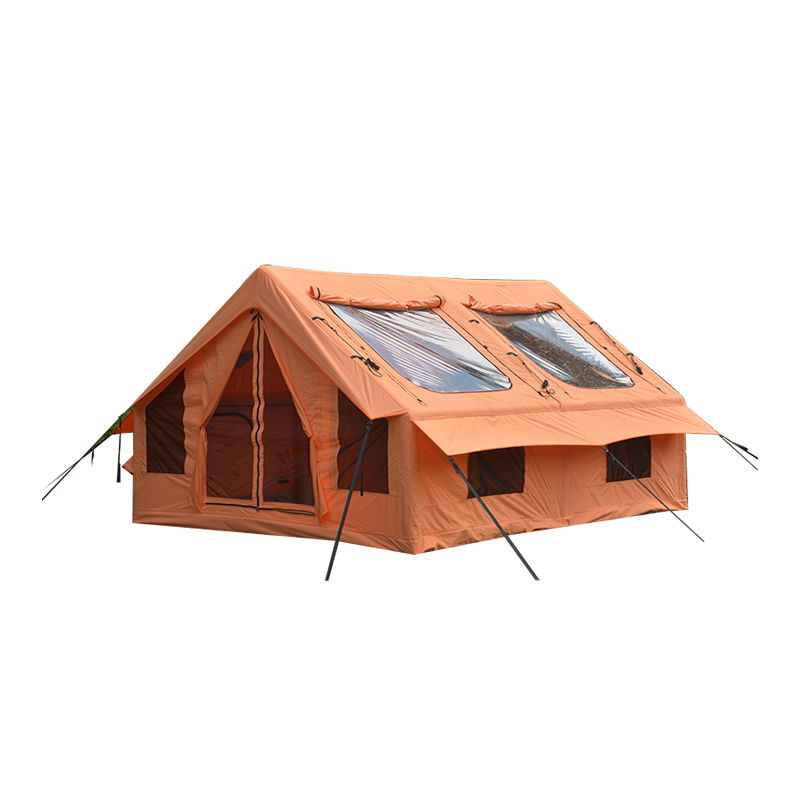
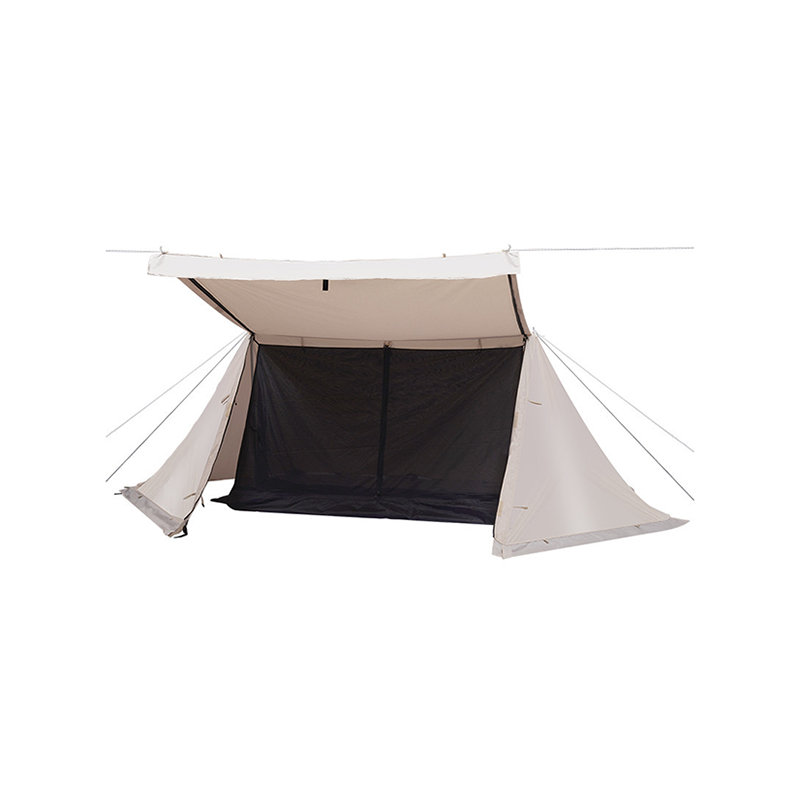
Hemispherical Inflatable Tent 2 Doors 4 Windows

Field notes · Shelter setup
A pitch is decided before you unroll the sleeping bag — by the slope under your feet, the direction of the wind, the angle of each stake, and how much tension you leave in the guys.
At two in the morning the wind arrives, and the tent that looked immaculate at dusk begins breathing in and out like a lung. The fix is rarely heroic. It was decided at six in the evening: a slight slope, a door pointing at the weather, guy lines staked too close to the wall.
The short answer is a fixed order. Choose level ground with some shelter from the prevailing wind, lay out and count every part before raising anything, build the structure loosely, stake at roughly 45 degrees away from the tent, then tension the guy lines along the seams before you unpack the interior. The rest of this guide explains why that order holds, and where it bends once you move from a pole tent to a pop-up or an air-column shelter.
A slope you can feel underfoot is a slope you will fight all night. Two or three percent — a few centimetres across a three-metre footprint — is comfortable. Anything steeper and you roll toward the wall, while rain runs under the fly on one side and pools against the other.
Skip the low point of any drainage line. Dry creek beds, the flat bottom of a gully, and ground with cracked mud collect water quickly, and in a storm they can collect more than water. Ridges are the opposite trade: dry and breezy, fully exposed, and the first place lightning looks for.
Then look up. Dead limbs caught in a canopy are reason enough to shift a tent two metres sideways. Give the pitch a clear radius of about three metres so guy lines and fly have room to sit without fouling scrub.
Door direction is the old argument. With rain and little wind, face the door downhill so water runs away rather than in. With wind, pitch the lowest, strongest side into it and let the door sit across the weather. When the two conflict, wind wins: a wet doorway is an annoyance, a collapsed panel is a night outside.
If you are still narrowing down a stopping point, our notes on choosing a campsite go deeper into drainage, exposure, and distance rules.
Check before staking
Dead limbs overhead, glass or nails in the soil, and ant nests under the floor. A groundsheet protects the tent fabric, not your feet.
Put every part in one place and count it before the first pole goes up. Missing stakes are usually discovered at dusk, in wind, with the bag already folded away.
Lay the tent out with its long axis into the wind and build the frame loosely. Stake the door end first, then work diagonally across the floor so the fabric tensions evenly. A tent staked corner by corner around the whole perimeter will almost always end up skewed.
The sequence holds for every tent, but the mechanics differ enough that the failure points move.
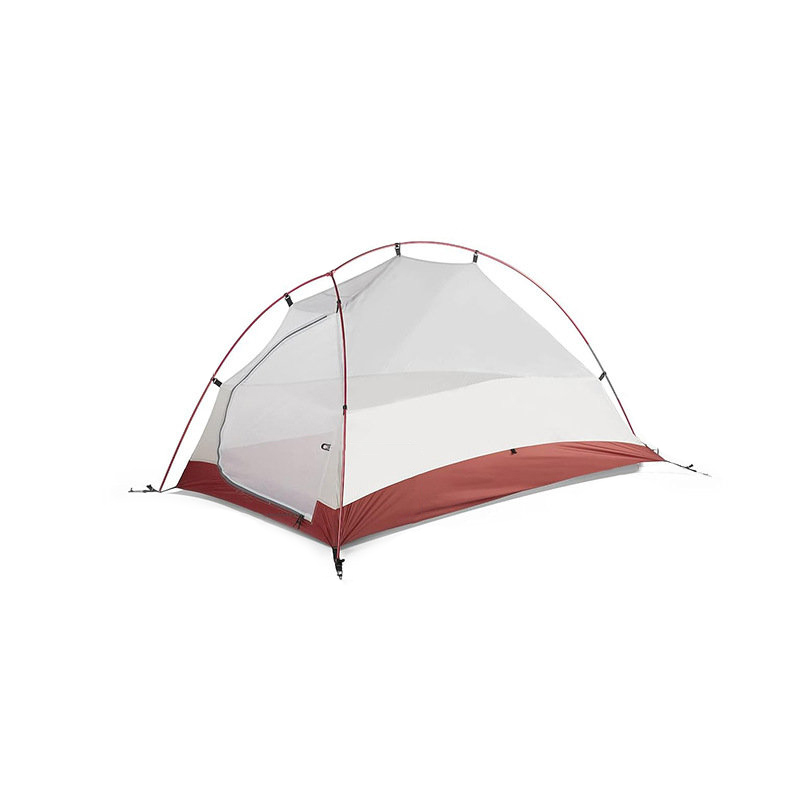
Assemble the pole sections without forcing them, then feed them through the sleeves in one straight run. Clip the poles to the inner, raise the frame, and tension corner to opposite corner. Never drag a sleeve cord around a sharp bend; that is how ferrules crack and sleeves split at the seam.
For long approaches, the ultralight backpacking tent in our range is the shape most people picture: two poles, a low profile, and very little to go wrong in the dark.
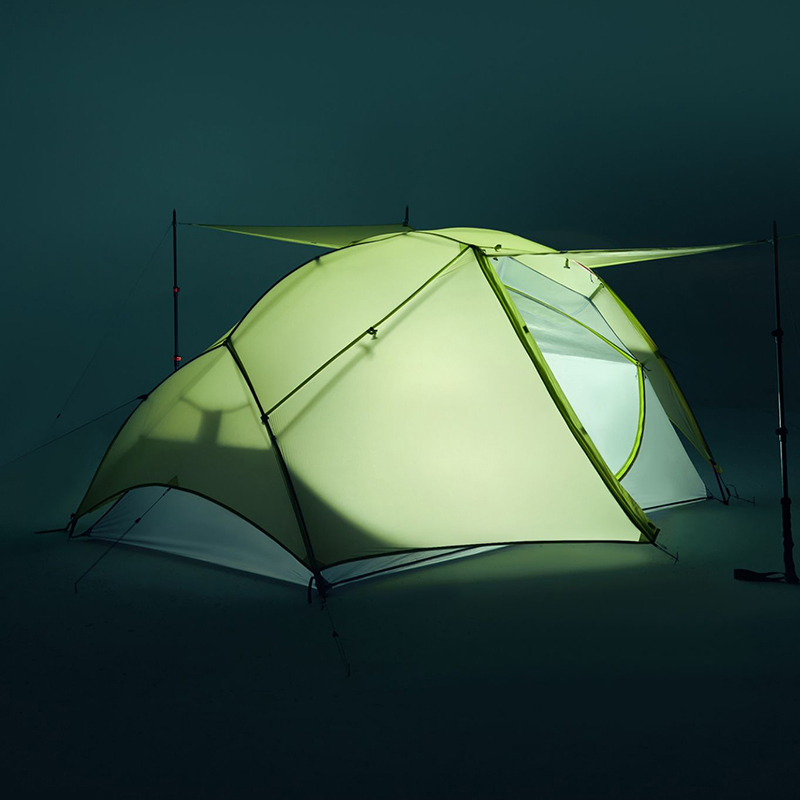 Ultralight Backpacking Tent for One to Two PeopleA manual two-pole shelter with 10D silicone nylon, featherweight alloy pole, and expandable dual tarp for lightweight hiking and sudden weather.View Product →
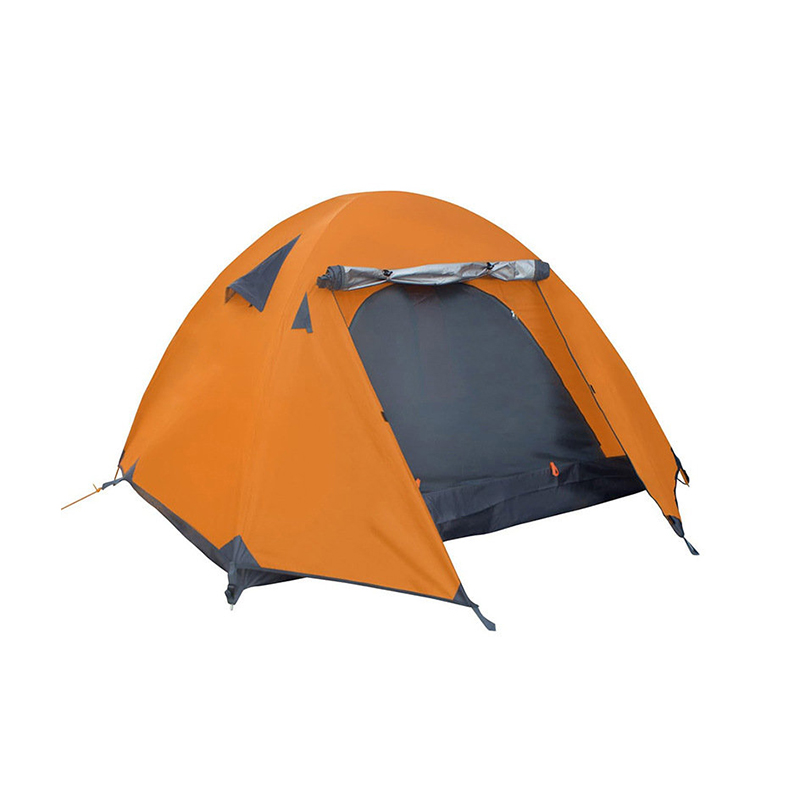
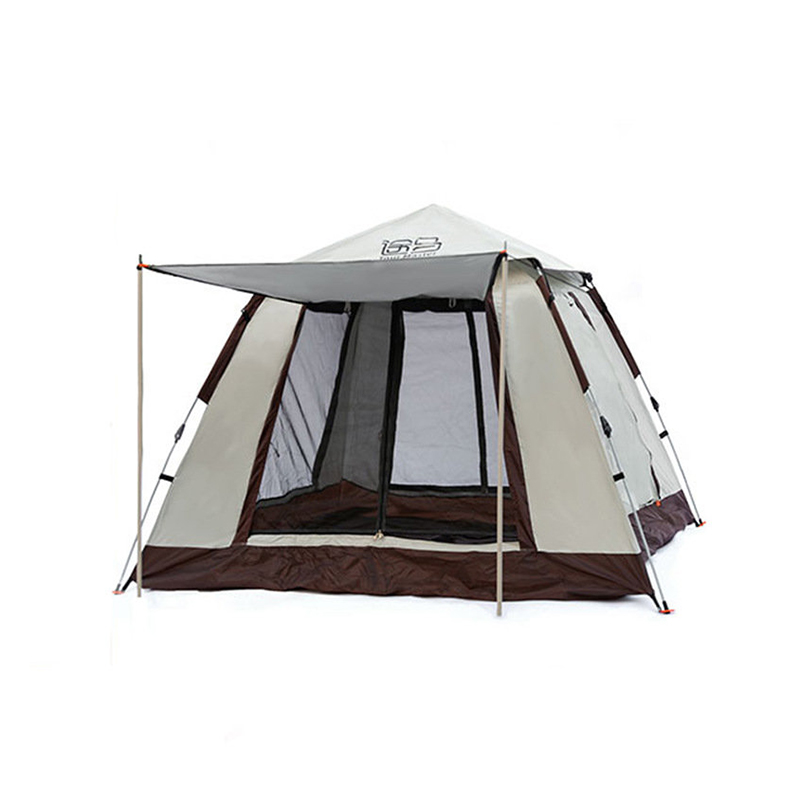
Spring frames are quick and slightly unforgiving. Keep fingers clear of folding joints, open the shelter in the printed sequence — usually hub first — and stake the base before the last panel pops, or the tent will walk across the site with the first gust. When packing, fold it back to its original diameter; a spring left compressed takes a set and the next pitch is slack.
The park camping hand throw tent shows the category at its best: seconds to open, and entirely dependent on whether you stake it before the wind gets underneath.
 Park Camping Hand Throw Tent for Two to Four PeopleA quick-opening hand-throw shelter with silver-coated Oxford fabric, basic waterproof and sun protection, and room for family outings or couples.View Product →
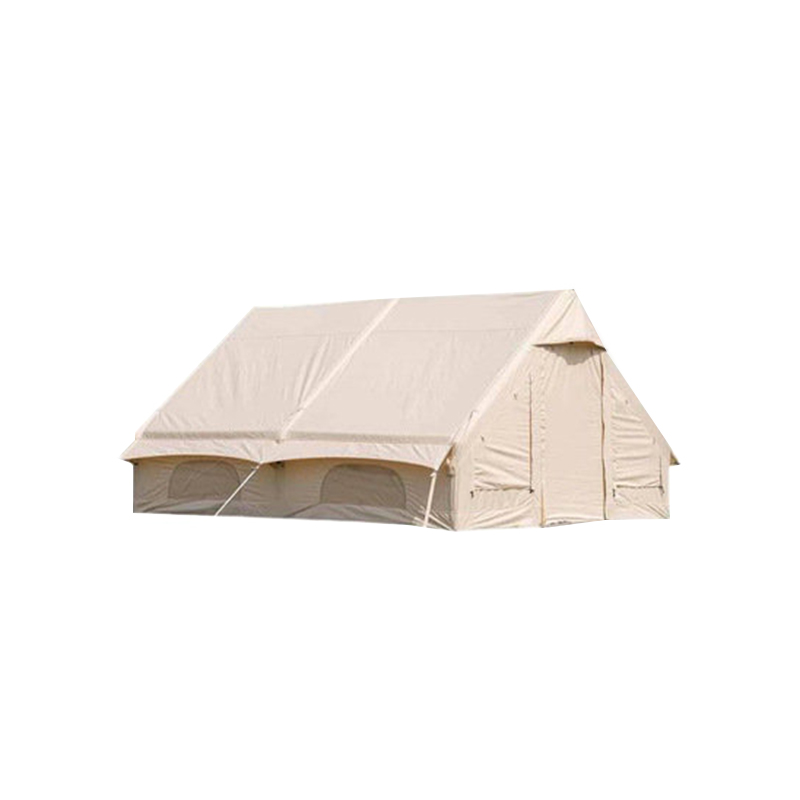
Use a pump with a gauge and fill to the figure printed on the tent; leisure air tents commonly sit around 0.5 to 0.7 bar, roughly 7 to 10 psi. The columns should feel firm to a light push, not rock hard. Check every valve cap and seam line, and bleed a little air at midday if strong sun has raised the internal pressure.
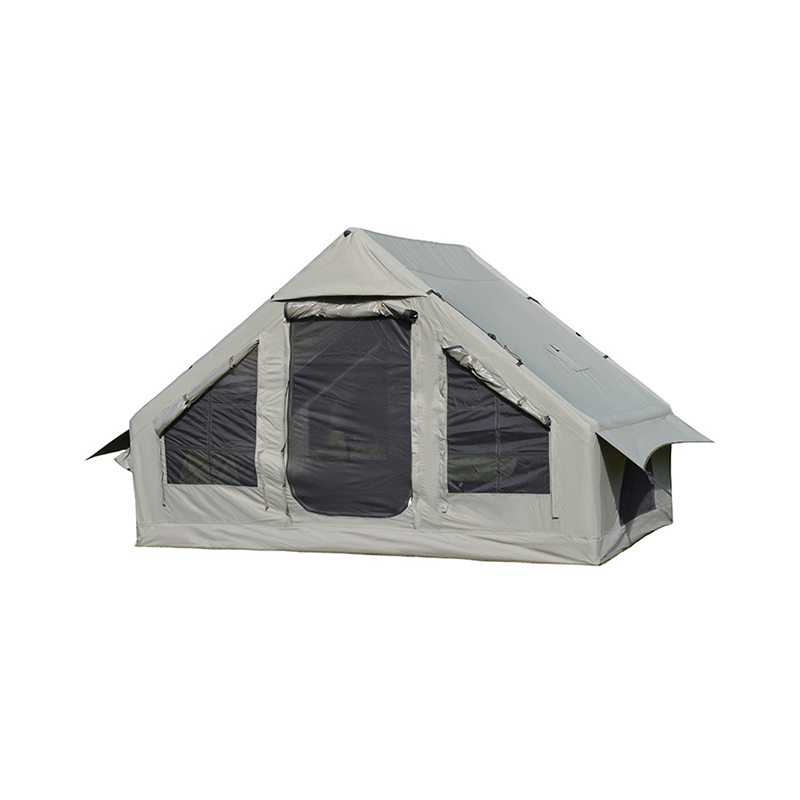
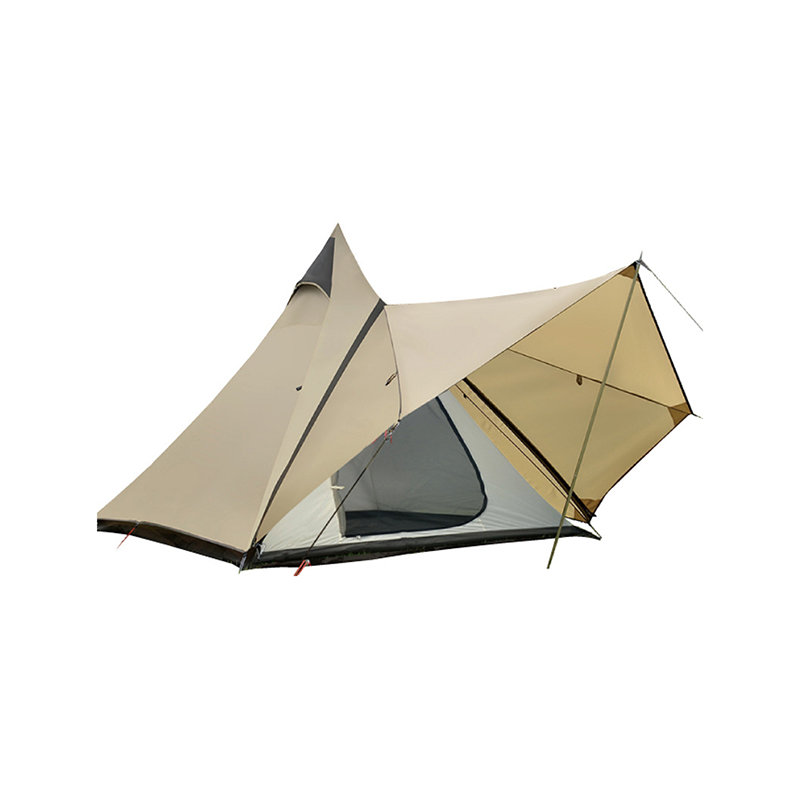
An inflatable tunnel tent earns its footprint in wind because the columns flex and recover instead of snapping, and the whole shelter can be re-tensioned by adding a single guy line.
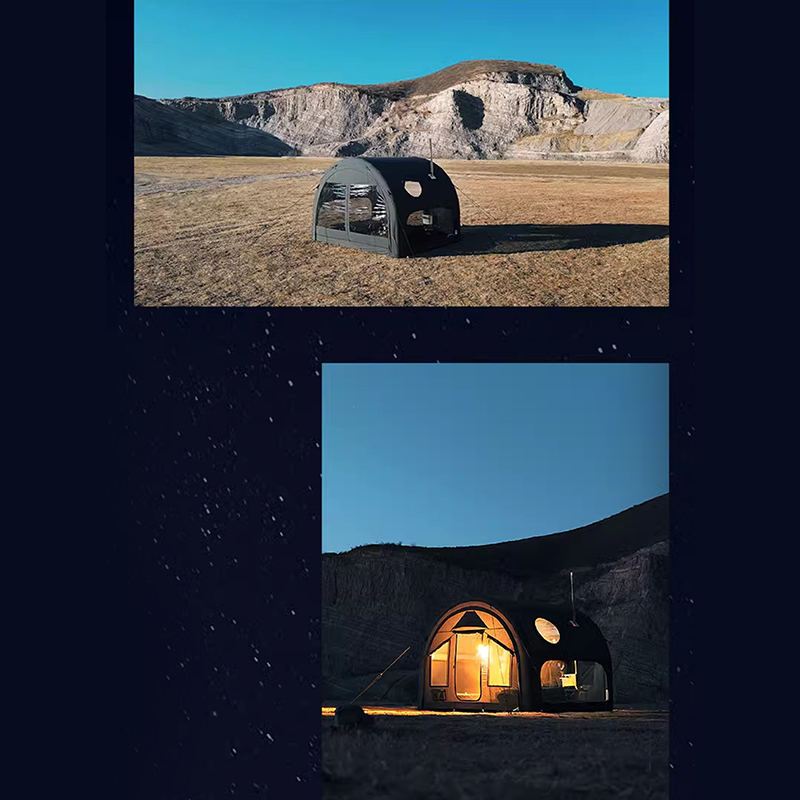 Inflatable Tunnel Tent for Two to Five PeopleA PVC air-column shelter with a 10-square-meter interior, floor-to-ceiling side windows, TPU viewing door, and four-season camping use.View Product →
Pressure note
Gauge, not guesswork. A hand pump with a dial takes the same space as a stuff sack and removes the most common cause of a damaged air column.
| System | Typical pitch time | Behaviour in wind | Best suited to | Watch out for |
|---|---|---|---|---|
| Pole and sleeve | Roughly 8 to 12 minutes | Stable once guyed; flexes rather than fails | Backpacking and changeable weather | A pole section lost in long grass |
| Quick-pitch or pop-up | Roughly 1 to 3 minutes | Light and tall; needs early staking | Beach days, festivals, short trips | Spring frame distortion after a bad fold |
| Air-column inflatable | Roughly 6 to 10 minutes with a pump | Large and rigid; heavy to move once up | Base camps, family trips, vehicle camping | Over-inflation, valve leaks, slow deflation |
Drive each stake at roughly 45 degrees with the head leaning away from the tent, so the pull of the fabric runs along the stake rather than lifting it out. In soft ground use a wider peg. In sand, bury a stone or a loaded stuff sack as a deadman anchor. In hard ground, loosen with a rock instead of hammering until the shaft bends.
Guy lines work best when they follow a seam or meet a pole crossing, because that is where the structure already carries load. Tension them evenly: one over-tightened line pulls the fly off centre and opens a gap on the opposite side, which is exactly where the rain will find a way in.
A taut tent sounds like a drum when the wind hits it. A loose one sounds like a paper bag — and the difference shows up on the first gust, not the third.
Two-finger check
A properly tensioned guy line moves 20 to 30 mm under light sideways pressure and springs back. If it swings freely, re-stake it; if it is rigid as wire, ease it off.
Wind is a load, not a nuisance. Once gusts pass roughly 40 km/h (25 mph) on exposed ground, a standard leisure tent is near the edge of what its guys and poles can hold. Lower the profile, add the second set of guys, or move behind something solid — solid meaning living trees without dead limbs above the pitch.
Rain gets in three ways: a slack fly touching the inner, a door flap rolled under instead of closed, and water running beneath the fly edge. Keep the fly clear of the inner wall, lift the edges a few centimetres on the windy side, and leave the top vent open in light rain. Condensation is a moisture problem rather than a leak, and it clears with airflow; a sealed tent collects it on the inside of the fly by morning.
Cold air drains into hollows overnight, so avoid the low point of a meadow in shoulder seasons. On snow, clear the ground before pitching and knock accumulated snow off the fly rather than letting it load the panels.
Storm rule
In a thunderstorm a tent is not shelter. Move to a building or a vehicle, and stay away from isolated trees, ridges, and gully bottoms — the same features to avoid when you choose the site.
Removal is the pitch in reverse, and it decides how the next one goes.
Brush off grit before it abrades the coating, and never pack a shelter wet for more than a day. Mildew is permanent, and it does not wash out.
So a pitch is a short sequence of decisions, and nearly all of them happen before the poles: the ground, the wind, the door, the stake angle, the tension. Get those right and setup becomes quiet, unhurried work. Get them wrong and no amount of extra guy line saves the night.
The single rule that covers the most ground: pitch for the weather you expect at three in the morning, not the weather you have at six in the evening.
If you are choosing the tent as well as the pitch, it helps to know how our camping tent range splits between manual, quick-set, and air-column construction before you start comparing numbers.