

 English
 中文简体
中文简体Hemispherical Inflatable Tent 2 Doors 4 Windows

rIf you have ever watched a family wrestle two air mattresses through a tent door that is ten centimetres too narrow, the problem is already obvious: the person count printed on the box tells you almost nothing about whether a tent will work for your family.
The short answer: choose a family tent by matching three measurable things - usable floor area per sleeper, the waterproofing and wind specification printed on the label, and the packed size and pitching time your trip actually allows. Treat the "4-person" or "6-person" rating as a filter, not a promise.
The rest of this guide explains how to check all three, which numbers are worth trusting, and which small details quietly decide whether a family weekend runs smoothly or ends early. Most disappointing family tents are not badly built; they are simply mismatched to the trip they were bought for.
Capacity ratings assume people lying shoulder to shoulder on bare floor, with no luggage, no cots and no room to turn over. That makes them a useful starting filter - a family of four should begin looking at six-person tents - but a poor final decision.
Work upwards from sleeping pads. A standard rectangular adult pad is 65 cm wide and 190 cm long; a child's pad is closer to 50 cm. Add 10 to 15 cm of shoulder gap between sleepers, then reserve a 30 to 50 cm strip along one wall for bags, shoes and a lantern. Two adults and two children therefore need roughly 260 cm of usable width and at least 220 cm of usable depth, before anyone tries to sit up.
Two details eat into that space. Tapered floors: many dome tents are widest at the centre and lose 30 to 40 cm at the foot end, so a quoted 300 x 300 cm footprint behaves more like 300 x 260 cm. Sloping walls: in a dome, only the middle third of the floor has close to full kneeling height, so the outer corners become storage rather than sleeping space.
| Advertised rating | Typical floor footprint | Realistic comfortable occupancy | What to watch |
|---|---|---|---|
| 4-person | 240 x 210 cm | 2 adults and 2 young children | Barely any gear space; usually a single door |
| 6-person | 300 x 300 cm | 4 people with bags, or 2 adults plus 3 children | Check how much floor is lost to wall slope |
| 8-person | 360 x 300 cm | 5 to 6 people, or 4 with cots | Often dividable, but heavier and slower to pitch |
Peak height matters more than it sounds. Below 170 cm, adults dress sitting down and the tent feels smaller than its floor plan suggests, while 190 to 210 cm at the centre lets most adults stand upright. Door width is the second quiet failure point: an air mattress or a folding cot needs a clear opening of at least 90 cm, and two doors turn one awkward bedtime queue into two easy exits.
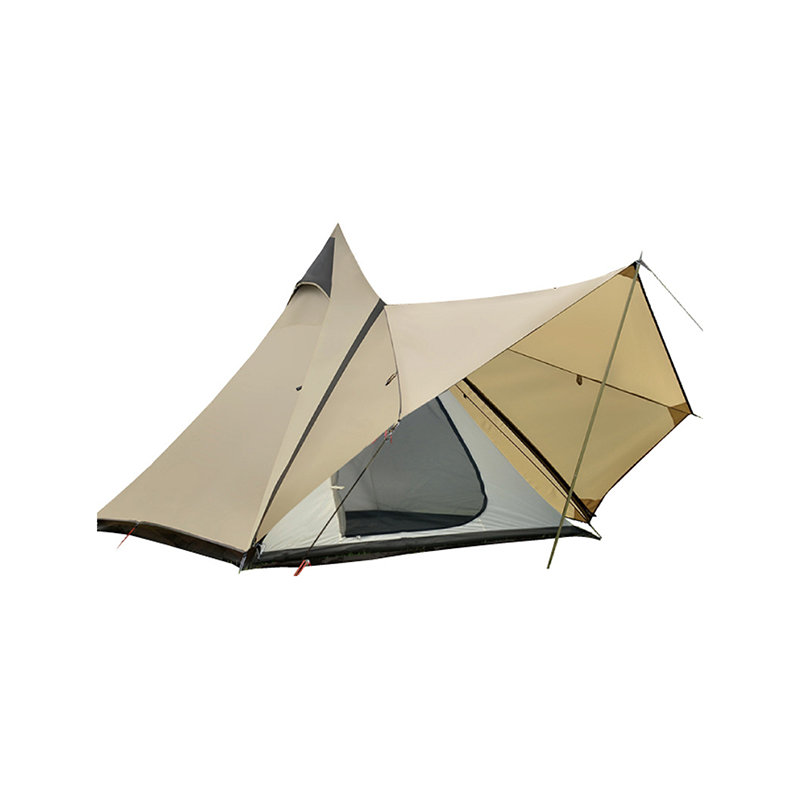
Structure decides floor area per kilogram, pitching time and behaviour in wind. Family tents fall into three broad groups, and each suits a different kind of trip.
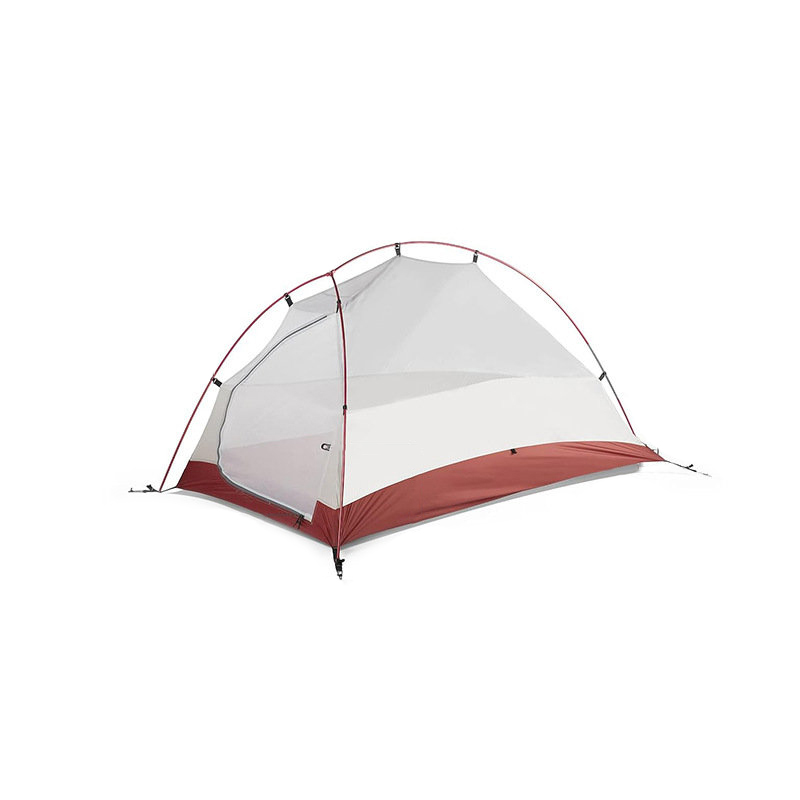
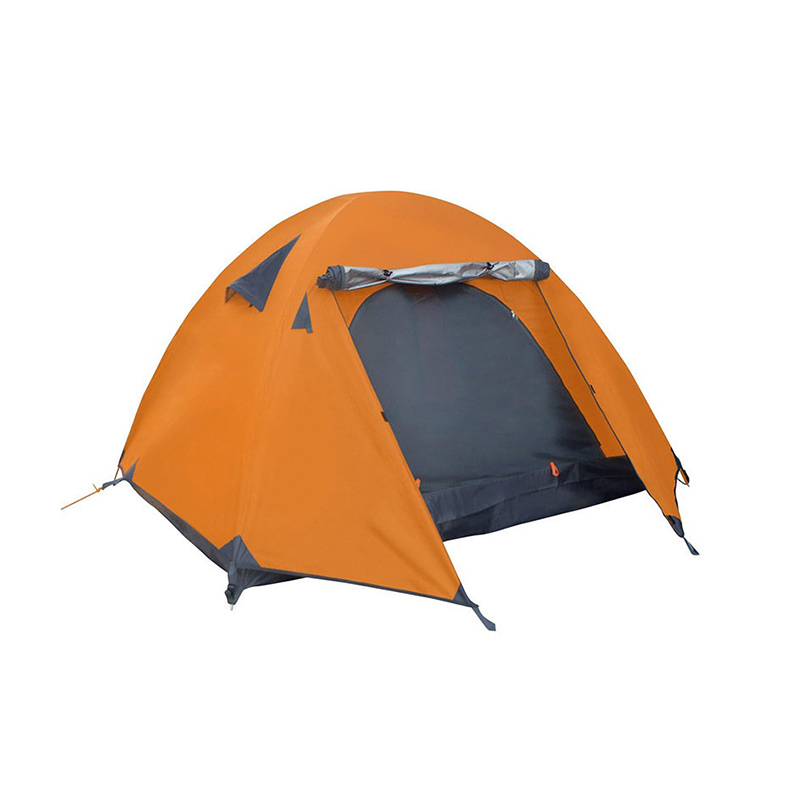
Dome tents shed wind from any direction and go up quickly, but their sloped walls waste floor space and their tapered footprint shortens the sleeping area. Tunnel tents give the best floor area per kilogram and the straightest walls, which is why long-stay campers like them, but they must be pitched end-on to the wind and every guy line needs proper tension. A half-tensioned tunnel in a crosswind is a noisy tent.
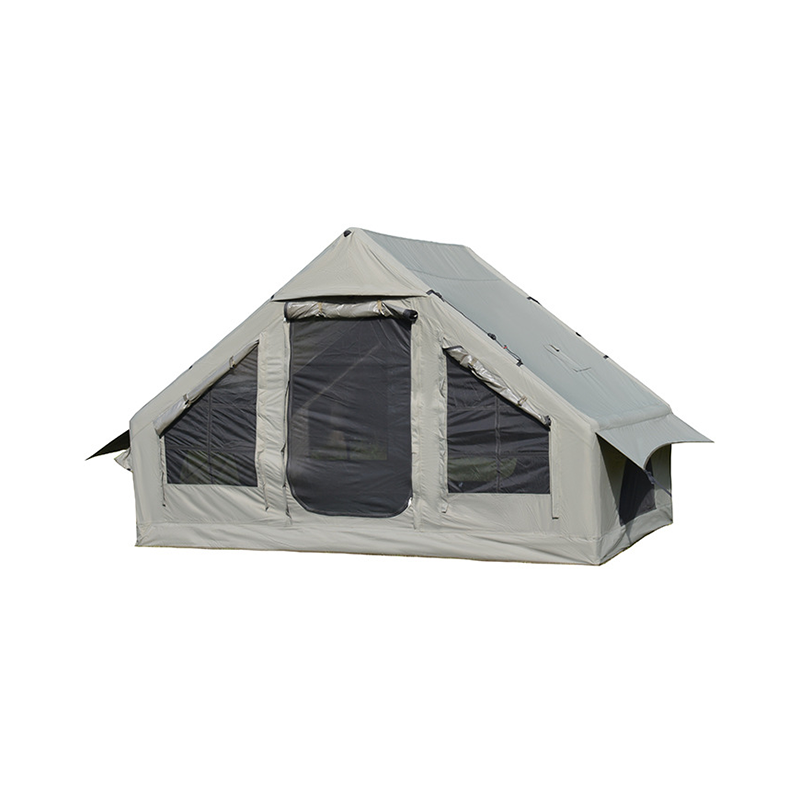
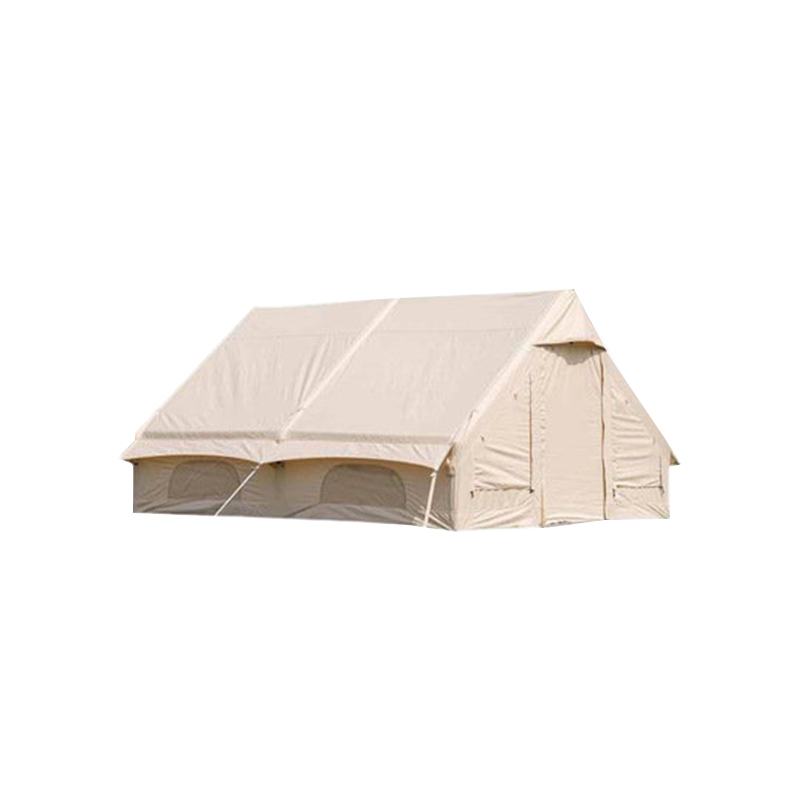
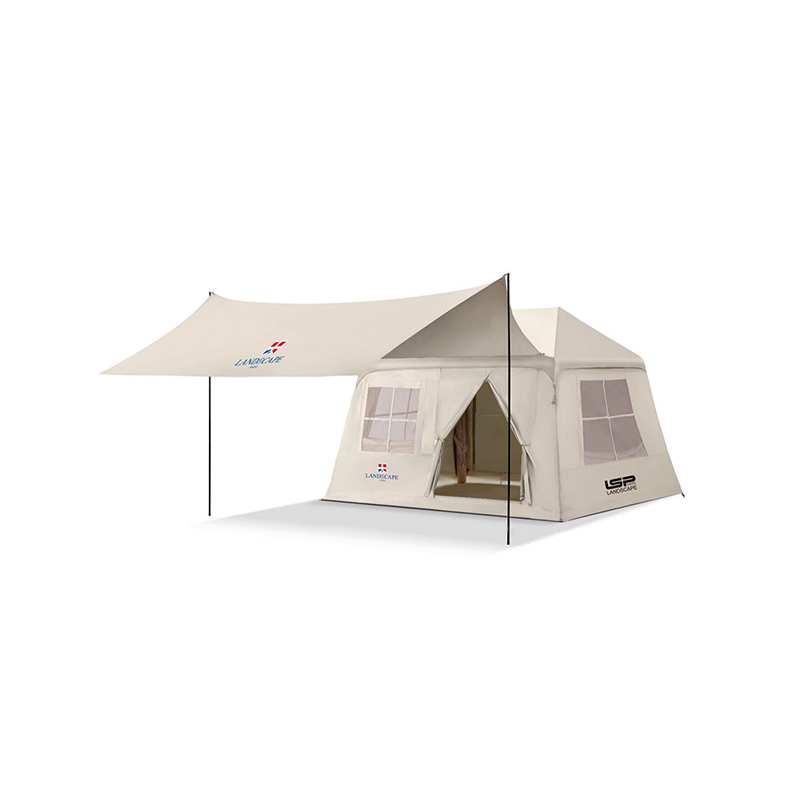
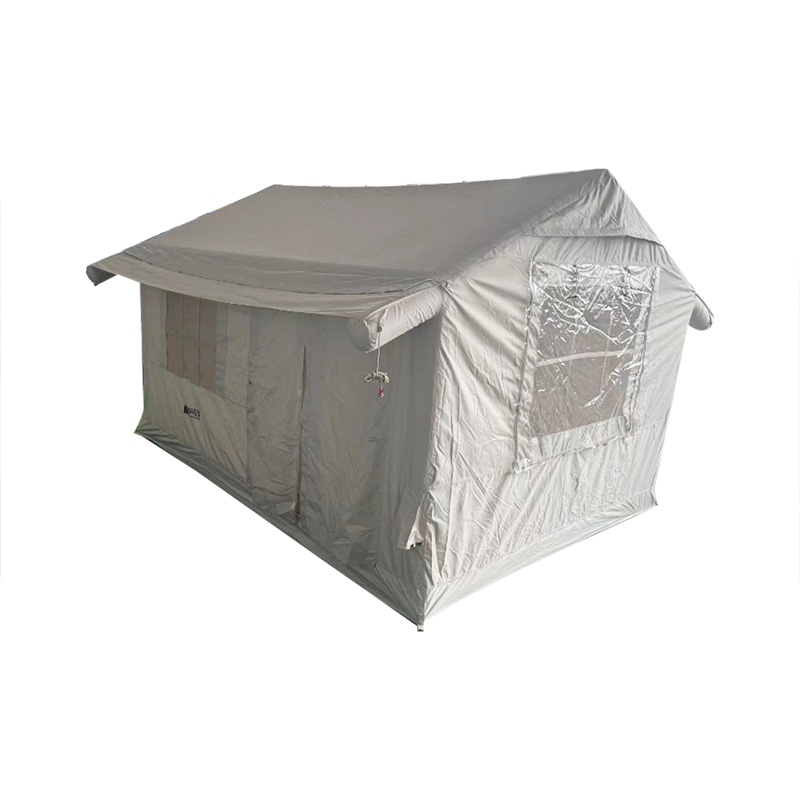
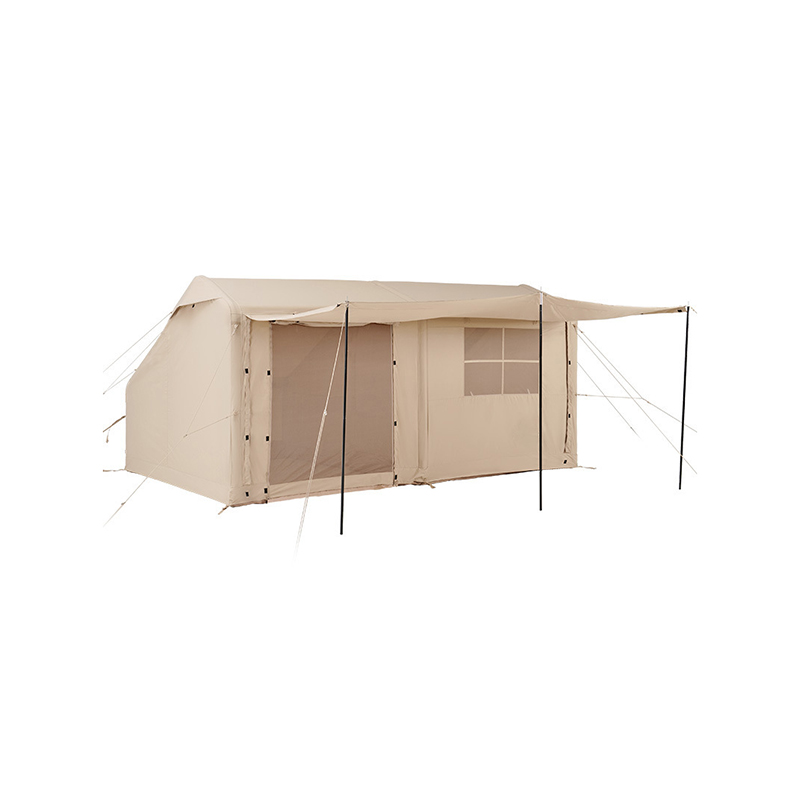
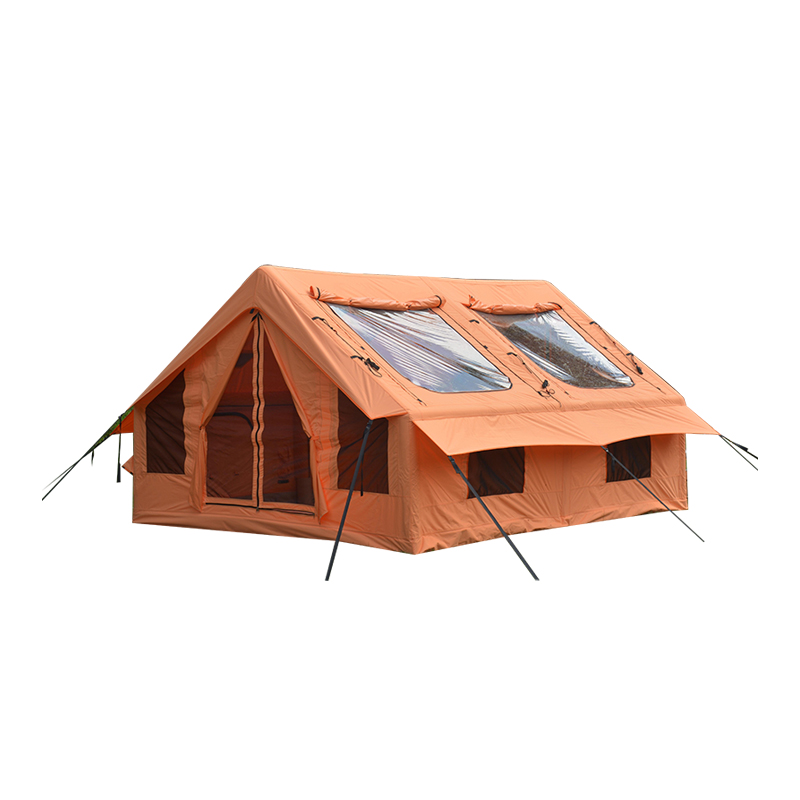
Cabin and air-column designs trade pack size for comfort: near-vertical walls, standing height across most of the floor and often a divider that turns one tent into two rooms. Air beams are inflated to roughly 0.5 bar, about 7 psi, with a hand or electric pump and hold that pressure for days, and there are no poles to lose or splinter. The trade-offs are honest ones - larger packed volume, more weight and a longer drying time after rain, because there is more fabric to air out. For families who camp from a car and want the tent to feel like a small room, that trade is usually worth making.
Waterproofing is stated as a hydrostatic head in millimetres - the height of a water column the fabric resists before it leaks. Because the test is standardised, these figures are comparable between manufacturers, which makes them one of the few genuinely useful specifications on a family tent.
A flysheet figure is only half the story. Check the groundsheet separately, where 5,000 mm or more is realistic for family use because it carries the weight of sleepers, cots and boots. Then check the seams: taped or sealed seams matter more than an extra 1,000 mm on the fly, because most leaks begin at a stitch line rather than through the middle of a panel.
Wind is harder to quantify because few brands publish a rating. Look instead for a sensible number of guy-line attachment points, aluminium poles where possible rather than fibreglass, and a flysheet that reaches close to the ground on the windward side.
A 3,000 mm flysheet pitched loosely in a crosswind will let in more water than a 1,500 mm flysheet pitched taut and turned into the weather.
Watch the groundsheet corners. Rain protection fails there first, where grit and repeated folding wear the coating. Wipe and dry the floor before storage, and never leave a tent packed away wet for more than a day or two.
A family of four releases roughly one to two litres of moisture into the tent air overnight through breathing and damp clothing. If that vapour cannot escape, it condenses on the coldest surface available, usually the inner wall above the sleepers. The result is a tent that feels damp at six in the morning even though it never rained.
Look for a combination of features rather than one large vent: two opposing vents that allow cross-flow, a mesh inner panel behind a closable outer door, and vents set high enough to sit under the fly's overhang where rain cannot blow in.
Quick test in the shop: count the openings. A tent with one door and one vent will trap moisture on a still, cold night. Two doors, two vents and a mesh inner panel are often the difference between a dry sleeping bag and a damp one.
A divider is not decoration. In a family tent it separates bedtimes, keeps torches and toys out of the sleeping area, and gives adults somewhere to sit after the children go to sleep. A one-bedroom, one-living-room layout with a full-height dividing wall and two entrances is the most flexible arrangement for four or more people, because the living side can stay a mudroom and storage area while the inner room stays clean.
When comparing layouts, measure the sleeping compartment rather than the total footprint. A 300 x 300 cm tent with a 180 cm deep inner room leaves 120 cm of living space; the same footprint with a 210 cm inner room leaves only 90 cm, which is narrower than a camp chair once the weather keeps everyone inside.
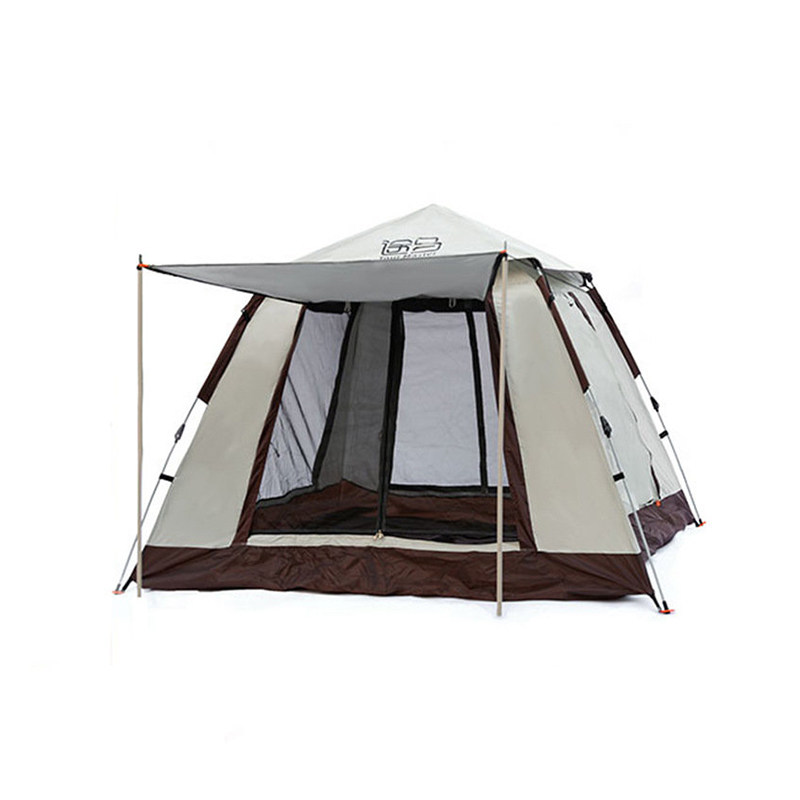
On hot trips the tent is for sleeping and a shade structure does the rest of the work. A screened shelter keeps insects out, lets air move through and gives children somewhere to sit during the middle of the day, when an unshaded tent becomes uncomfortably warm.
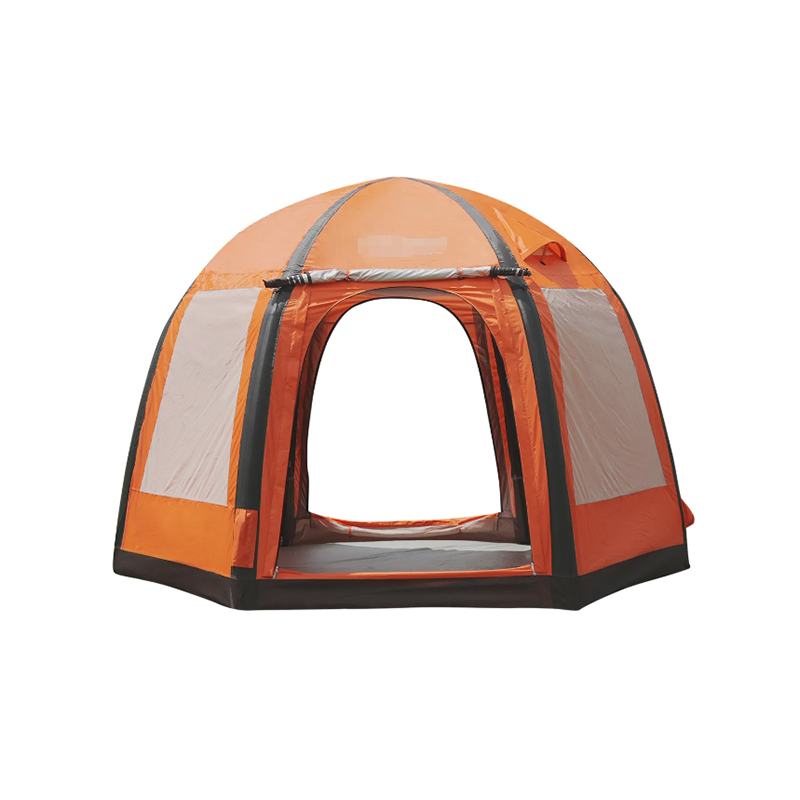
Hexagonal screen houses are a common family choice because six sides share the load of wind and rain and there is no single long wall to catch a gust. Budget the ground as well as the money: a three-metre hexagonal model needs a level patch roughly five to six metres across once the guy lines are staked out.
The same handful of errors appears in almost every unhappy family tent purchase, and all of them are avoidable with fifteen minutes of checking.
Do not skip the practice pitch. Pitching once in daylight, even in a garden, exposes missing pegs, an unfamiliar pole sequence and a bag that will not fit back into its stuff sack. It is the cheapest insurance a family can buy.
If you are narrowing the choice within the most common family size, a six-person inflatable camping tent buying guide is a useful next read, because that class is where layout differences matter most.
If a tent passes all seven checks, the remaining decision is price, colour and whether the brand still stocks spares in three years' time.
A family tent works when its usable floor matches how your family sleeps, its weather specification matches the trips you take, and its packed size and pitching time match the effort you are willing to make at the end of a long drive. The person count is where the search starts, not where it ends.
Buy one size larger than the number of people sleeping in it, check the fly and groundsheet figures separately, count the doors and vents, and pitch it once at home before it matters. Families who follow those four steps rarely need a second tent. To see how those principles translate into different layouts, structures and sizes, you can browse the full tent range and compare the specifications side by side.