

 English
 中文简体
中文简体Gear & Performance Report
A timed breakdown of how air-beam architecture compares to traditional poles when the clock is running — from first stake to final fold.
Direct Answer: Inflatable Tents Set Up 50-70% Faster Than Pole Tents on Average
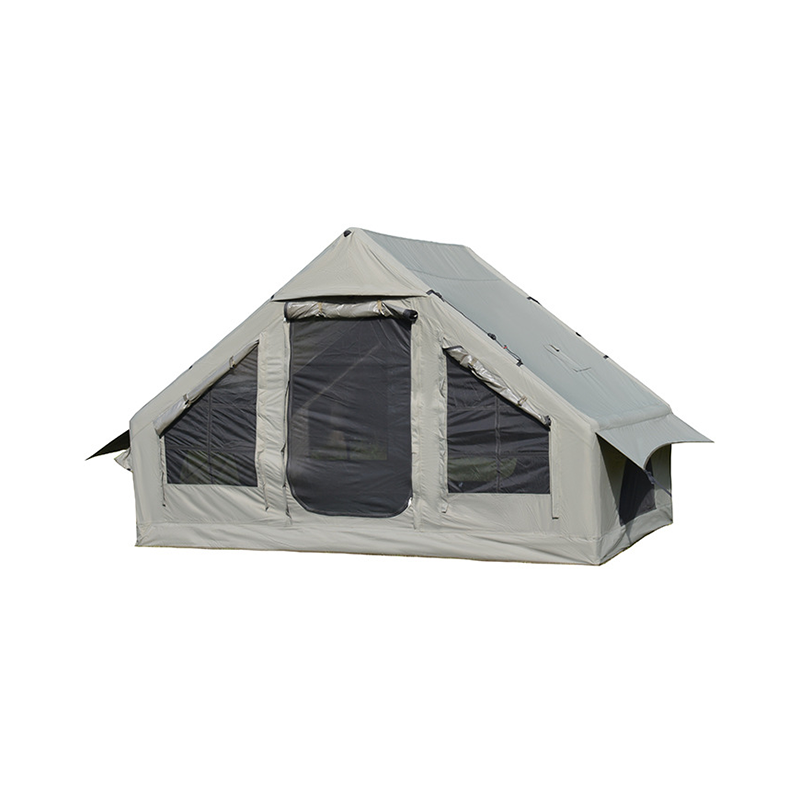
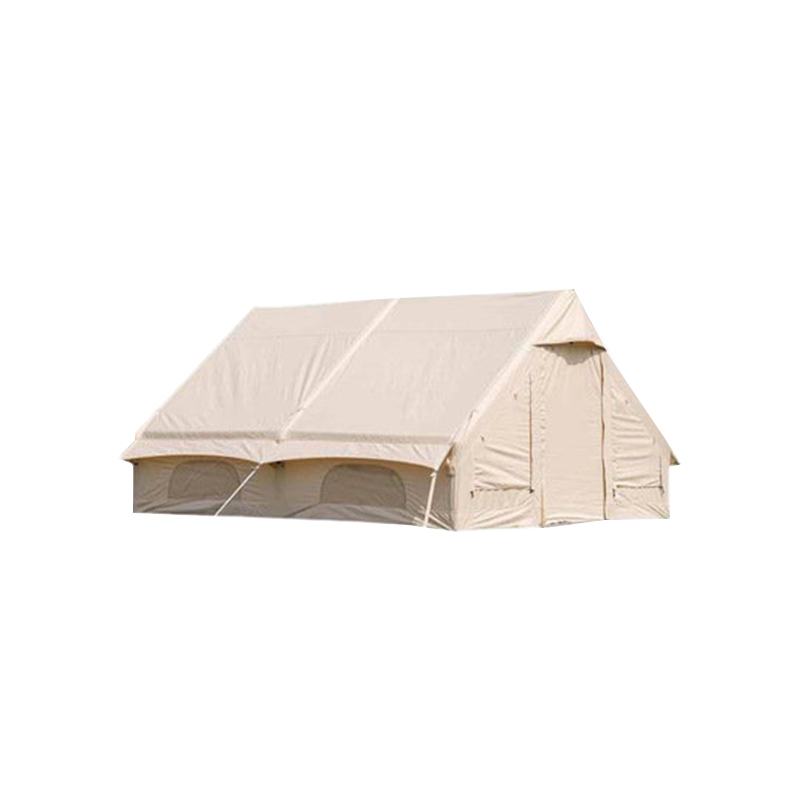
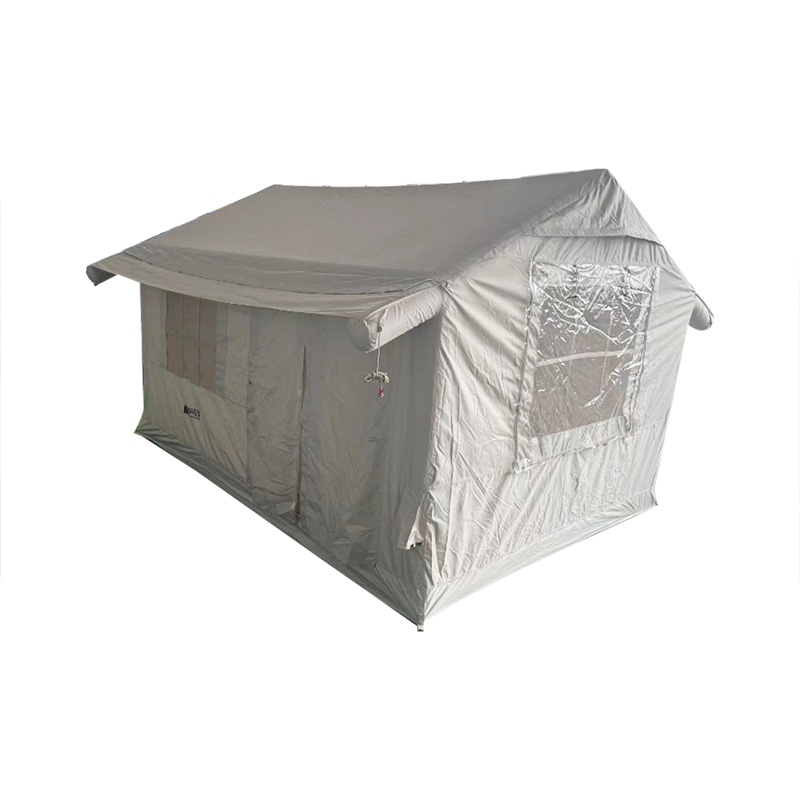
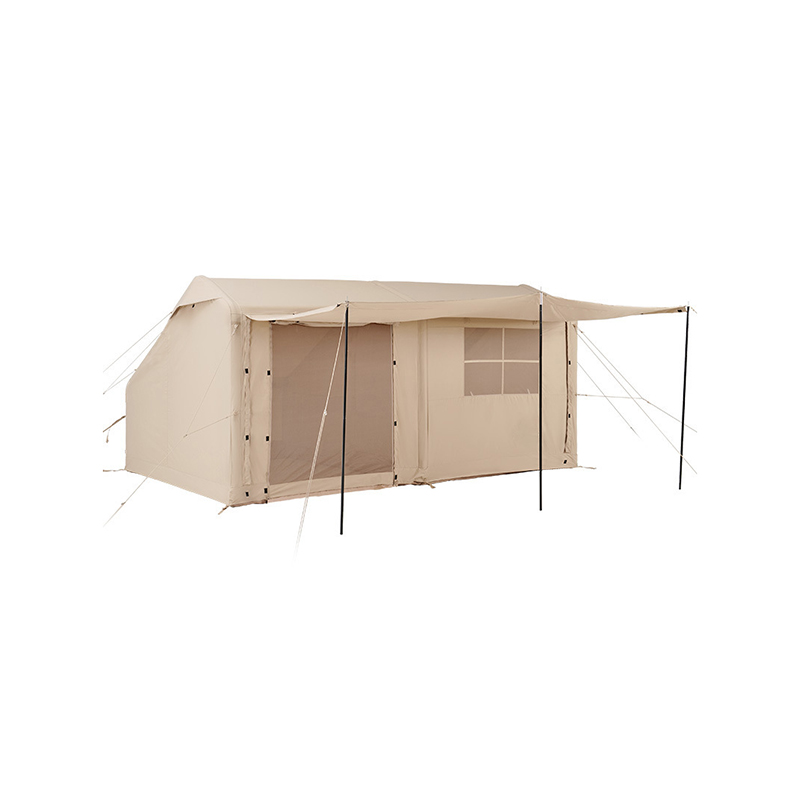
Most inflatable tents can be fully pitched in 3 to 8 minutes, while comparable pole tents of similar size typically take 15 to 25 minutes for one or two people to assemble. This gap widens further with larger family or group tents, where threading multiple poles through fabric sleeves and connecting joint hubs can push pole tent setup times past 30 minutes. The core reason is mechanical simplicity: an inflatable structure like a blow up tent house replaces dozens of pole segments, shock cords, and sleeve insertions with a single pump action that inflates all air beams simultaneously through a connected valve system. Takedown follows the same pattern, with inflatable tents deflating and packing down in roughly half the time pole tents require, since there are no individual pole sections to disassemble, dry, and coil. The time savings are real and measurable, but they depend on tent size, beam count, and whether the pump being used is manual or electric.
Where the Time Savings Actually Come From
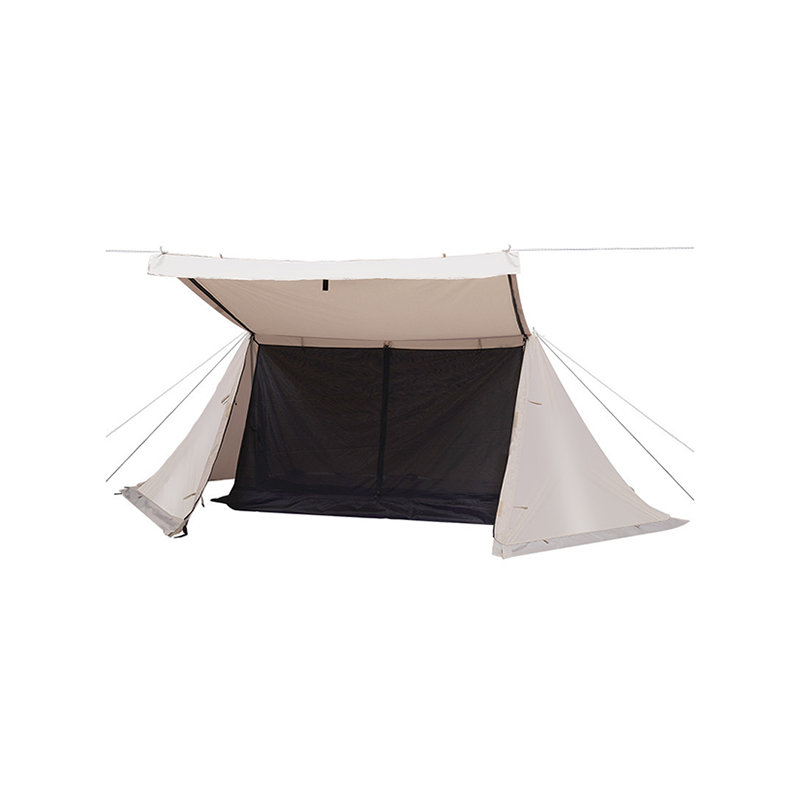
Setting up a pole tent involves several sequential steps: laying out the footprint, threading poles through fabric channels or clipping them to hubs, raising the structure, staking the base, and attaching the rainfly. Each step depends on the previous one being completed correctly, and mistakes such as a bent pole or a misaligned sleeve can add several minutes to the process.
inflatable tents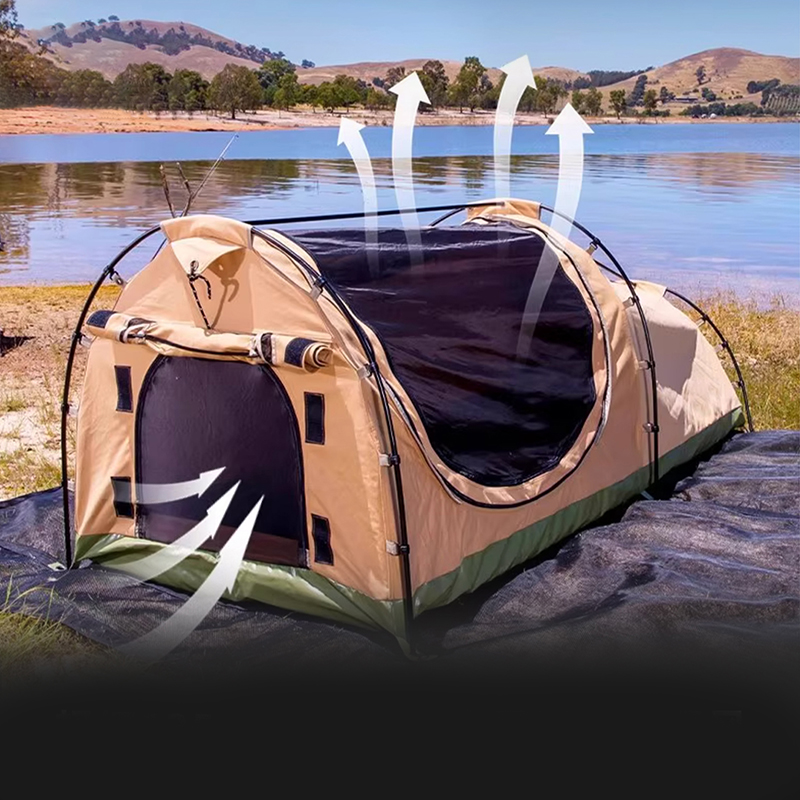
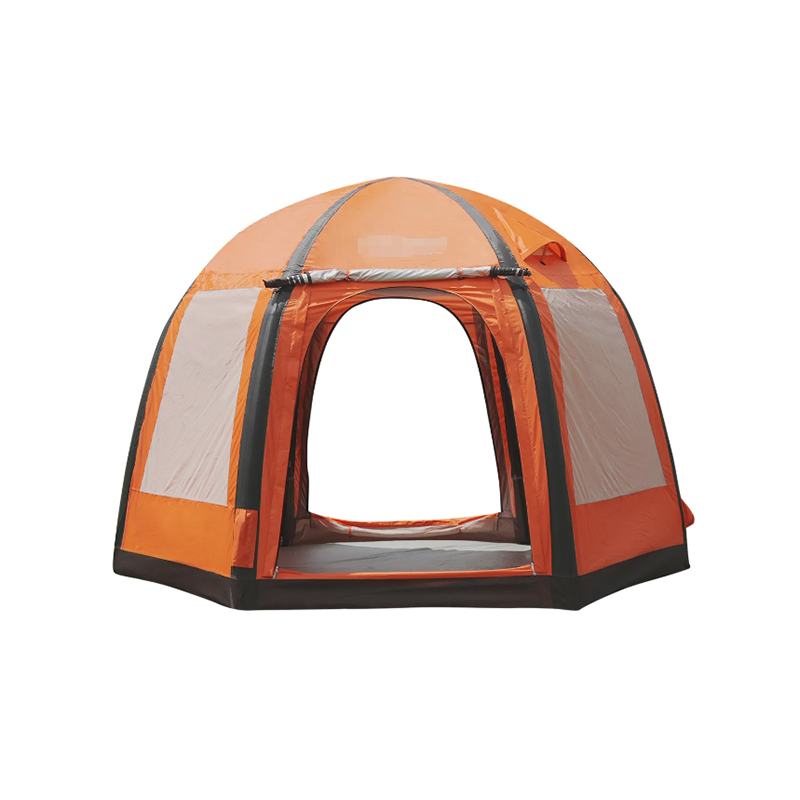
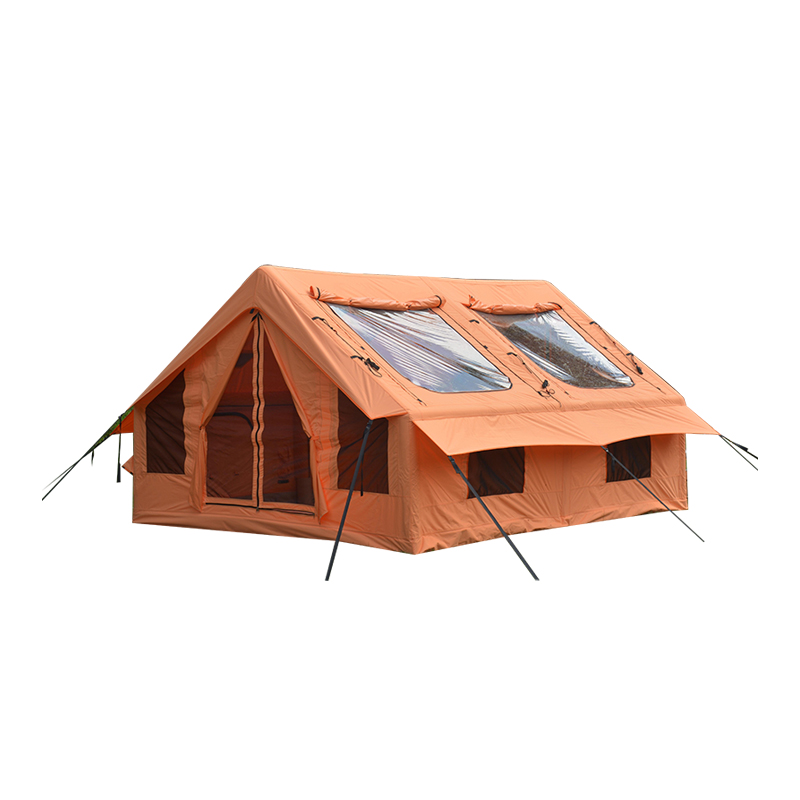
Inflatable tents collapse several of these steps into one. Once the tent body is unrolled and staked at the corners, a single pump connects to one or more valves, and all beams inflate together or in a pre-set sequence. There is no threading, no risk of a pole popping out of its sleeve, and no need to align multiple hub connections. This structural simplification is why an inflatable dome tent can often go from bag to fully standing in the time it takes to inflate a beach float.
Poles ask for patience. Air asks for a pump and two minutes.
Manual Pump vs Electric Pump Timing
A manual double-action pump typically inflates a mid-size two-room tent in about 4 to 6 minutes of steady pumping. An electric pump, often powered by a car's 12V outlet or a rechargeable battery, cuts this down to under 2 minutes in most cases. For larger group tents with beam volumes exceeding 300 liters, the difference between manual and electric inflation becomes more noticeable, sometimes saving an additional 5 minutes.
Setup Time Comparison by Tent Size
The table below outlines approximate setup times across common tent sizes, based on manufacturer testing data and average camper-reported times for both tent types.
| Tent Size | Pole Tent Setup Time | Inflatable Tent Setup Time |
|---|---|---|
| 2-Person Tent | 8-12 minutes | 3-5 minutes |
| 4-6 Person Family Tent | 15-20 minutes | 5-8 minutes |
| 8-10 Person Group Tent | 25-35 minutes | 8-12 minutes |
| Multi-Room Event Tent | 40-60 minutes | 12-18 minutes |
These figures assume the crew has some familiarity with the specific tent model. First-time setup for either tent type generally takes 20-30% longer, since users are still learning stake placement, valve locations, and guy line routing.
Takedown Speed: Where the Gap Widens Even Further
If setup savings are meaningful, takedown savings are often more dramatic. Breaking down a pole tent requires removing every stake, detaching the rainfly, unclipping or unthreading each pole section, and carefully folding or rolling poles to avoid stress fractures at the joints. This process is fiddly, especially in wind or rain, and rushing it increases the risk of damaging a pole.
Deflating an inflatable tent, by contrast, usually involves opening the main valves and either letting gravity and hand pressure push the air out, or using a pump's reverse-suction mode to speed up the process. A mid-size inflatable dome tent can typically be deflated and folded in under 5 minutes, compared to 10-15 minutes for a similarly sized pole tent. Campers packing up in the rain or in a hurry to beat check-out times consistently report this as one of the most appreciated advantages of inflatable designs.
Field Note
Pole disassembly is a fine-motor task performed under time pressure, often with cold or wet hands. Deflation is a gross-motor task — open the valve, apply pressure, done. This difference in physical demand is part of why inflatable tents feel significantly faster to pack away, even beyond the raw time numbers.
Situations Where the Speed Advantage Matters Most
The setup and takedown speed of an inflatable tent is not just a convenience statistic — in certain scenarios, it becomes a genuine practical advantage.
- Festival camping, where arriving late and racing to set up before dark is common, and where a quick-pitch blow up tent house means less time fumbling with poles in a crowded field.
- Family trips with young children, where a parent needs to get shelter up quickly while also managing kids, luggage, and mealtime logistics.
- Sudden weather changes, where a fast setup can mean the difference between staying dry and getting caught in a downpour mid-assembly.
- Solo campers, since inflatable tents require significantly less coordinated effort than pole tents, which often benefit from a second set of hands.
Factors That Can Slow Down Inflatable Tent Setup
While inflatable tents are generally faster, a few factors can erode that advantage if not accounted for ahead of time.
- Forgetting or losing the pump, which turns a 5-minute setup into an impossible one without a manual backup.
- Low battery on an electric pump, forcing a switch to slower manual inflation mid-setup.
- Cold weather, which can make air beams feel firmer to inflate and may require topping up pressure after the initial pitch as temperatures continue to drop overnight.
- Uneven or rocky ground, which affects staking time for both tent types equally but can slow down the final tensioning step on inflatable models.
Caution
Always pack a manual pump as backup, even when traveling with an electric one. A dead battery at the campsite shouldn't be the reason a fast tent becomes a slow one.
Tips to Maximize Setup and Takedown Speed
Practice the First Pitch at Home
Setting up a new blow up tent house once in the backyard before a trip familiarizes users with valve locations and stake points, cutting real-world setup time by several minutes on the first camp night.
Keep the Pump Charged and Accessible
Storing the pump in an easily reachable outer pocket of the carry bag, and charging it before departure, avoids the most common cause of delayed setup.
Stake Corners Before Inflating
Securing the base corners first prevents the tent from shifting as beams fill with air, which speeds up the process and results in a straighter, more even pitch.
Best Practice
A quick home trial, a charged pump, and staked corners before inflation — together these three habits routinely shave two to three minutes off first-attempt setup times.
Final Takeaway
When it comes to raw setup and takedown speed, inflatable tents have a clear and consistent edge over pole tents, typically cutting total pitch time by 50 to 70 percent and takedown time by a similar margin. This advantage comes from replacing multi-step pole assembly with a single pump-driven inflation process, and it becomes especially valuable for families, solo campers, and anyone setting up in poor weather or fading light. An inflatable dome tent won't eliminate every setup task — staking and guy lines still take time — but it removes the most error-prone and time-consuming part of the process entirely. For campers who prioritize speed and simplicity over the lightest possible pack weight, the time savings alone can justify the switch from traditional poles.