

 English
 中文简体
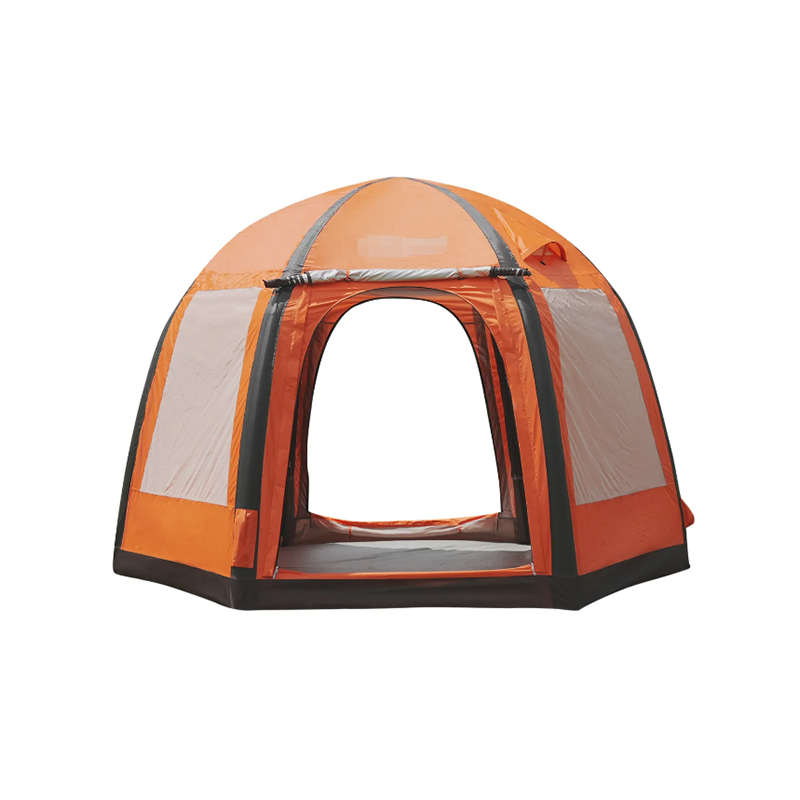
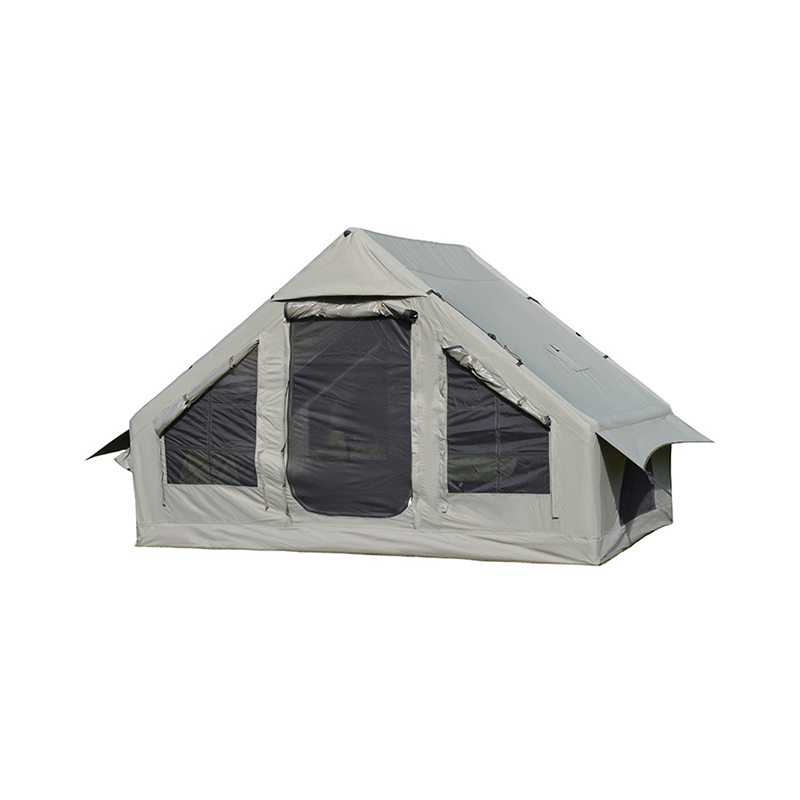
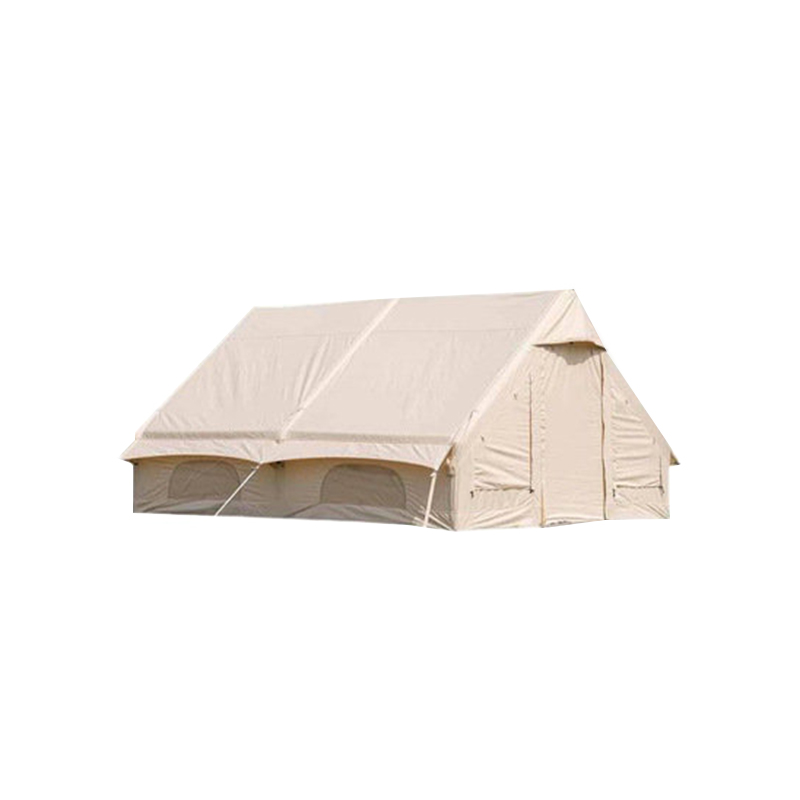
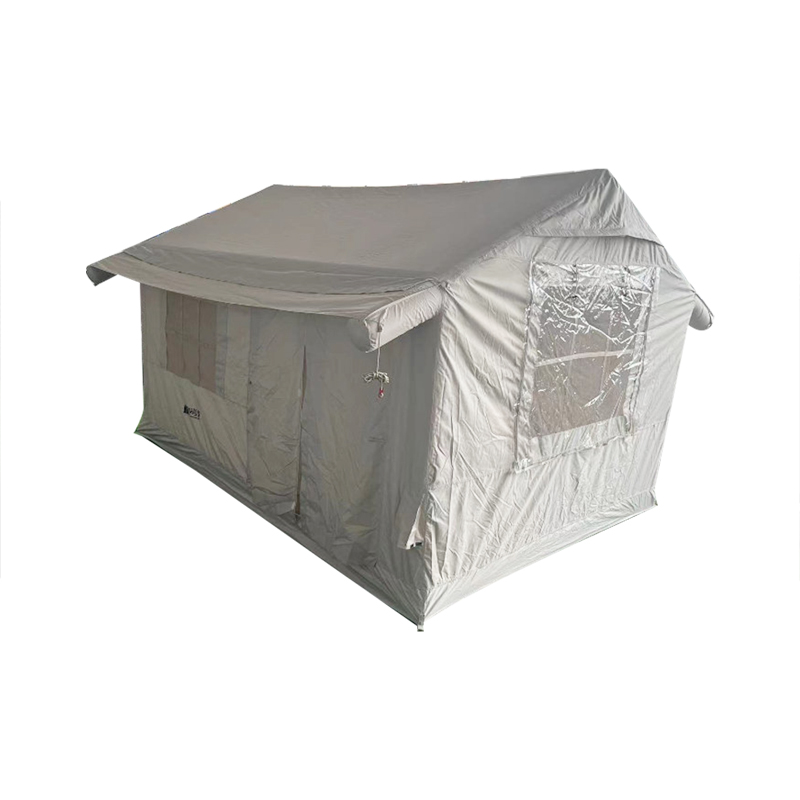
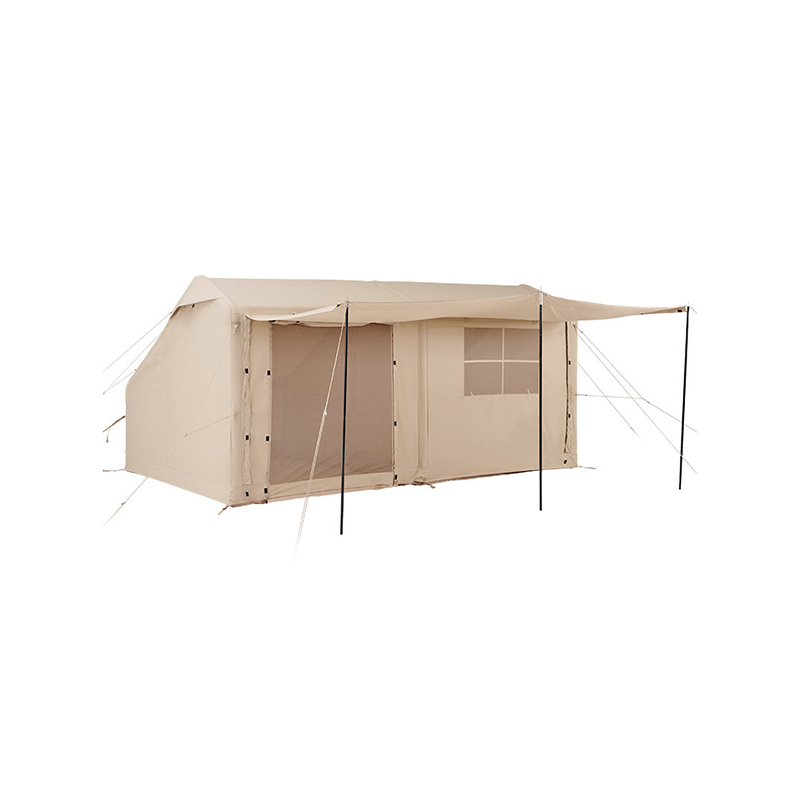
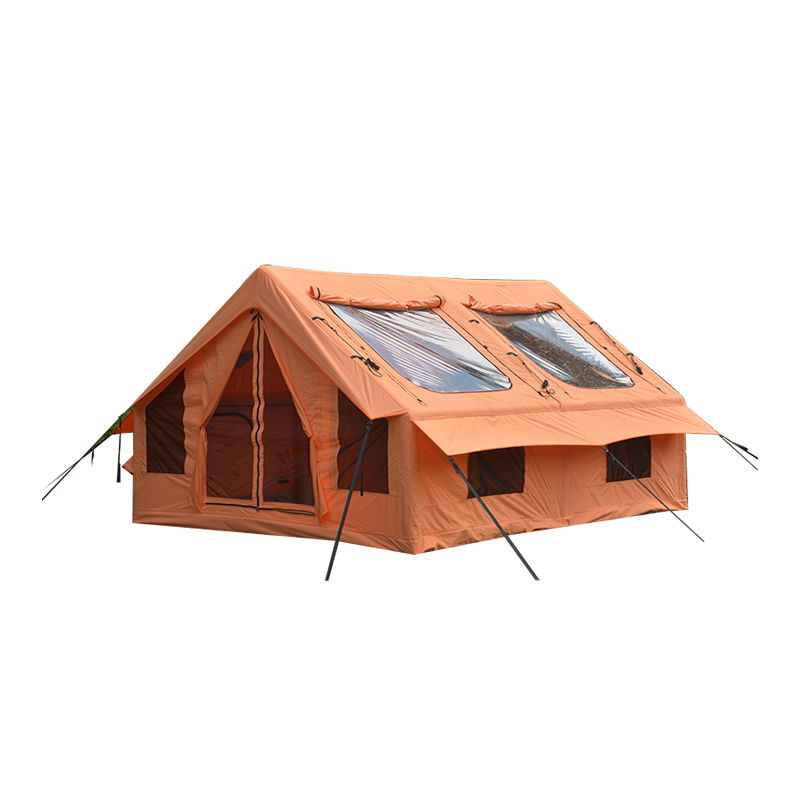
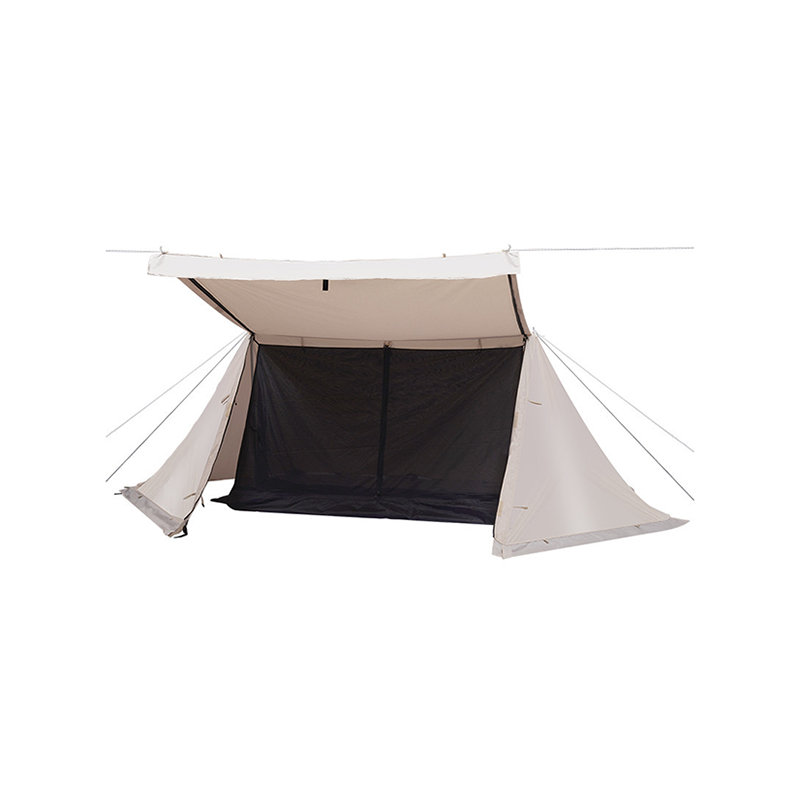
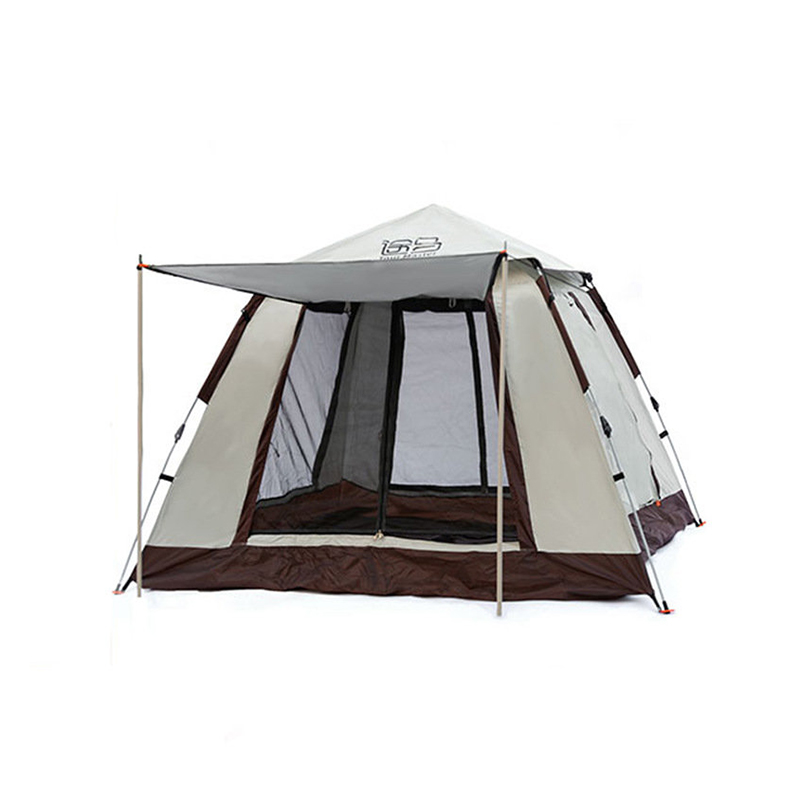
Hemispherical Inflatable Tent 2 Doors 4 Windows

Most dining fly problems begin before the tarp leaves the stuff sack. A 3 × 3 m fly looks generous on the grass and turns out to be a four-person shelter once a table, two coolers and a stove are inside it. The working number is 0.45 to 0.6 square metres of overhead cover per seated person, plus a 1.5 m buffer between the table and any cooking line.
The reference point most crews still use is the Philmont-style 12 × 12 ft nylon tarp, roughly 3.6 × 3.6 m and about 13 m² of flat coverage. That size seats six to eight adults at a picnic table and still leaves standing room at the ridge. Anything smaller is a personal shelter with ambitions.
Rig the fly before the tents go up. It is the room where the trip actually happens — meals, map checks, drying layers and the evening debrief.
Two dimensions decide whether a shelter feels usable rather than merely present: ridge height and edge height. A ridge at 2.1 to 2.4 m lets most adults stand upright; edges dropping to 1.0 to 1.2 m keep driven rain out without turning the whole structure into a wind scoop.
Packed weights below assume a silicone-treated nylon or polyester fly with guy lines and a stuff sack. Heavier PU-coated tarps add 30 to 50 percent.
| Fly size | Flat area | Seats comfortably | Best use | Typical packed weight |
|---|---|---|---|---|
| 2.9 × 2.9 m (9.5 × 9.5 ft) | 8.4 m² | 3 to 4 | Small crew, two-person base | 0.6 to 0.8 kg |
| 3.0 × 3.0 m (10 × 10 ft) | 9 m² | 4 to 5 | Couples, one table | 0.7 to 0.9 kg |
| 3.6 × 3.6 m (12 × 12 ft) | 13 m² | 6 to 8 | Scout patrol, group cooking | 1.0 to 1.4 kg |
| 4.5 × 4.5 m (15 × 15 ft) | 20 m² | 10 to 12 | Base camp, two tables | 1.6 to 2.2 kg |
Configuration matters as much as the tarp. The same 12 × 12 fly can be a wind tunnel or a dry dining room depending on how it is pitched.
The sequence is the same every time: walk the ground and clear the stones, set the ridge height before tensioning anything, pull corners first and edges second, then re-tension after the first hour. Nylon relaxes as it wets out, so a fly that was drum-tight at noon will sag by dinner. On sloping or exposed ground, the same logic that governs general tent setup methods applies here.
Two flies that look identical on a product page can differ by two seasons of UV exposure. Three materials do most of the work:
Ask for the hydrostatic head rather than the word waterproof. 1,500 mm handles steady rain; 3,000 mm and above is what you want for a shelter expected to sit through a multi-day storm. Seam sealing is not optional on any of them, and factory-taped seams are worth the premium.
A dining fly is unbeatable on weight and cost. It is the wrong tool in four situations: heavy insect pressure, camps that need standing height for a crowd, sites with no trees and no room for poles, and commercial settings where the shelter is part of what guests paid for.
That is where purpose-built shelters take over. A screen house keeps the table dry and the mosquitoes out, with mesh walls and a coated roof in a single frame. For campers who want covered dining space without learning tarp knots, a quick-open canopy deploys in under a minute. Larger camps and glamping operators tend to move to air-column inflatable shelters, where canopy and structure are one inflated unit that people can walk into and stand up in.
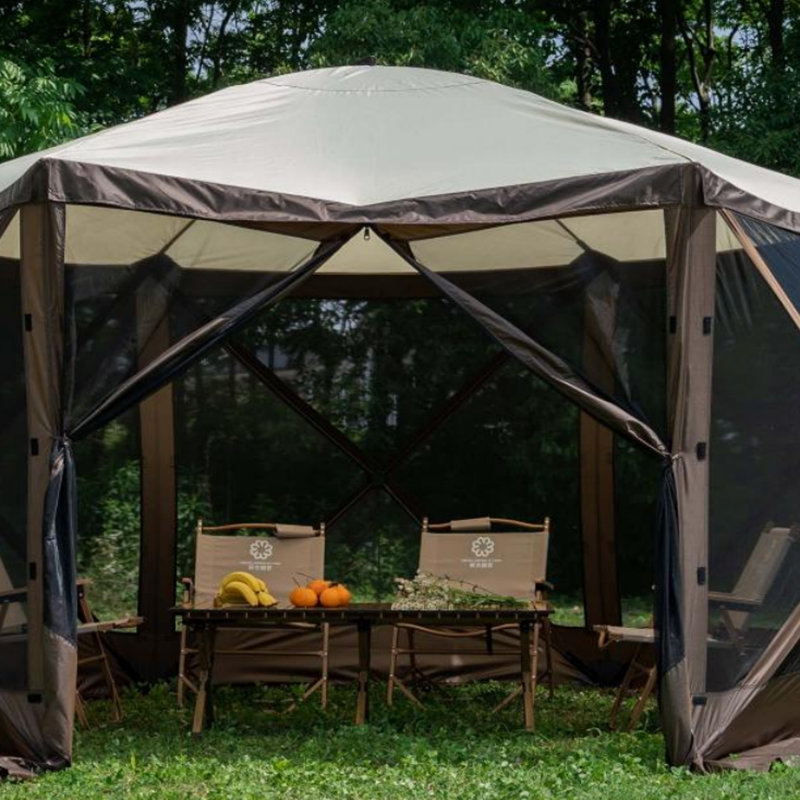 Hexagonal Camping Screen House for Family DiningA mesh-walled, waterproof-roof shelter in one frame, positioned as the family compromise between a dining fly and a bug-season tent.View Product →
Each format trades packed weight for a fixed shape. The screen house is the compromise most families settle on: it behaves like a dining fly in rain and like a tent in bug season, and it does not need a second person to hold a pole while the first ties a hitch.
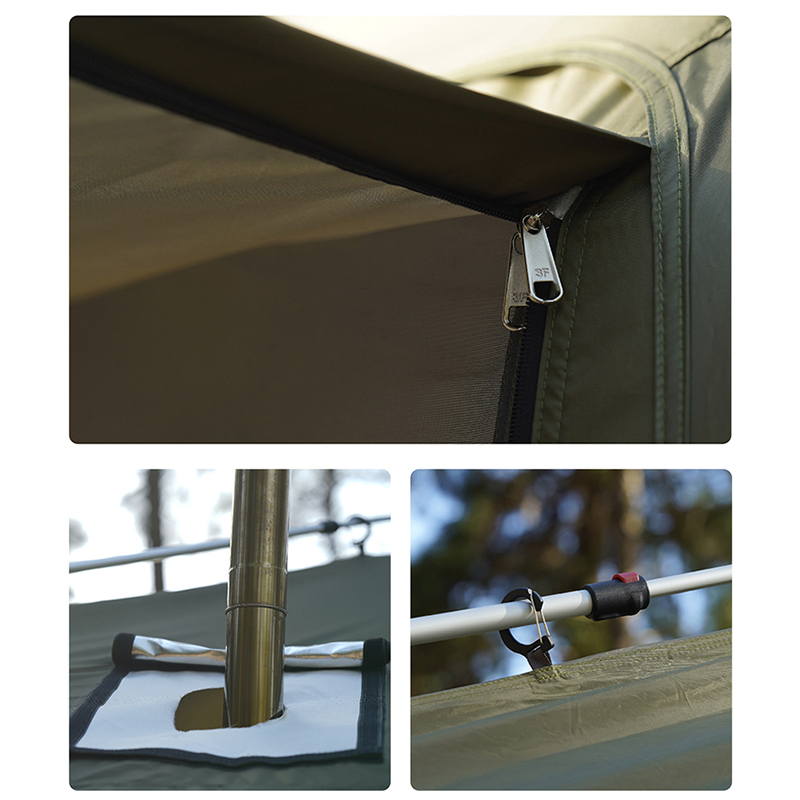 Quick-Open Canopy Tent for Camping and PicnicsAutomatic aluminum frame and four-sided airflow make this a fast-deploy shade and rain shelter for beginners and campers who want covered space without tarp knots.View Product →
For program buyers and rental fleets, the decision usually comes down to how many times a season the shelter is pitched and struck. A tarp folded forty times a summer will fail at the grommets long before the fabric itself gives out, which is why reinforced tie-outs and spare pole sections matter more than a few grams of weight.
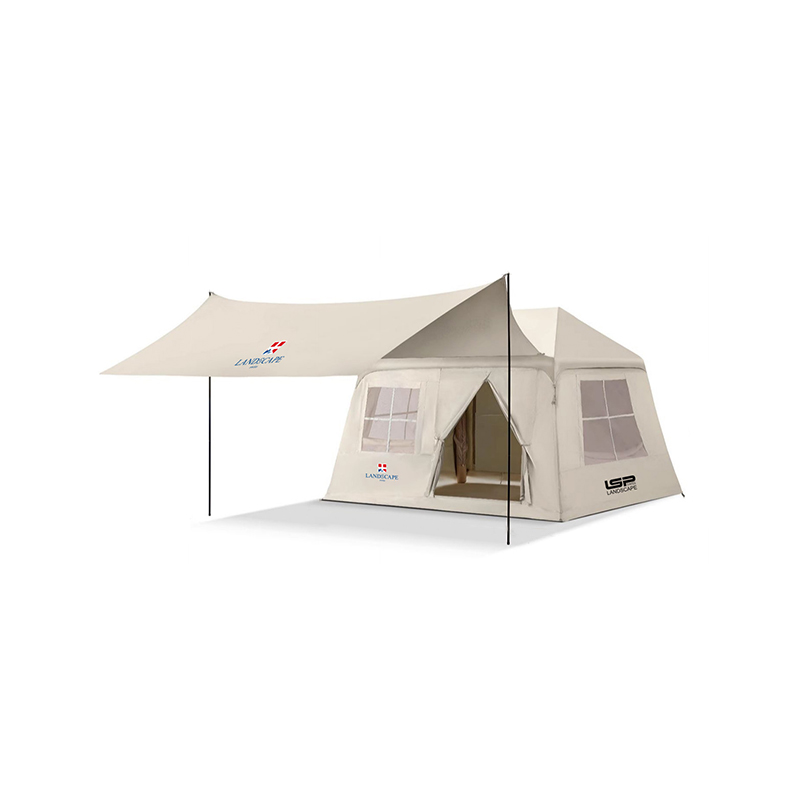
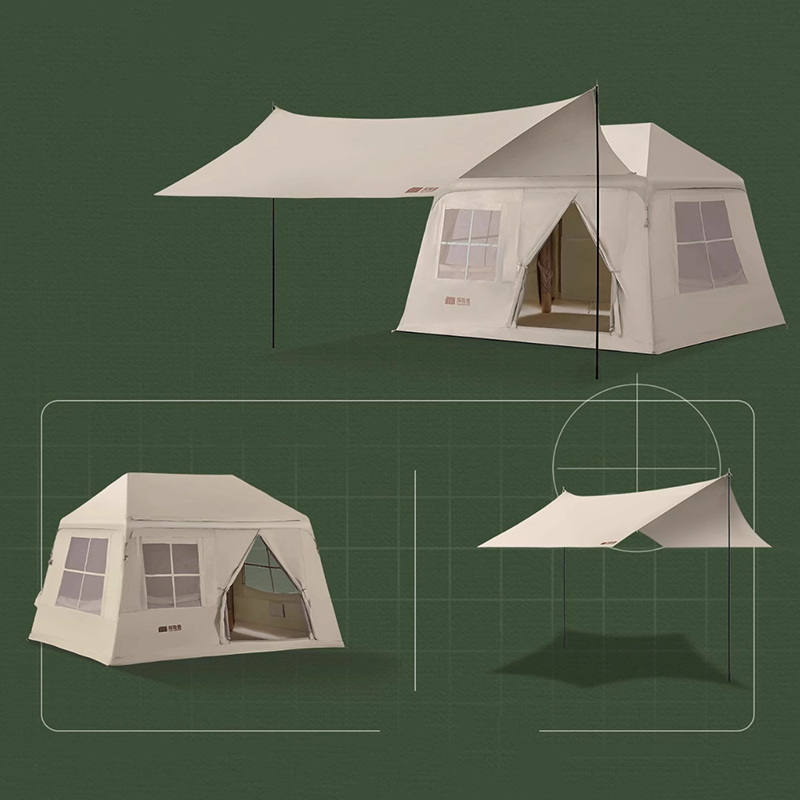 Inflatable Camping Tent With Extended CanopyA stand-up inflatable shelter with a 330 cm front awning and mesh windows, suited to group camping, picnic shelter, or temporary family gathering space.View Product →
Buyers sourcing group shelters for a retail line, a rental fleet or a scout program tend to trip over the same five details. None of them show up in a product photo.
Site selection is the other half of the specification. A shelter that works on a sheltered woodland pitch can fail in an open field, and the same judgement that goes into choosing a campsite decides whether the fly is a dining room or a sail.
Nothing about a dining fly is complicated. The failures are almost always the same three: too small for the group, too low to stand under, or a fabric chosen for its price rather than for a week of UV. Measure the people who will eat under it, decide whether the shelter serves a night or a season, and the rest of the specification follows on its own.