

 English
 中文简体
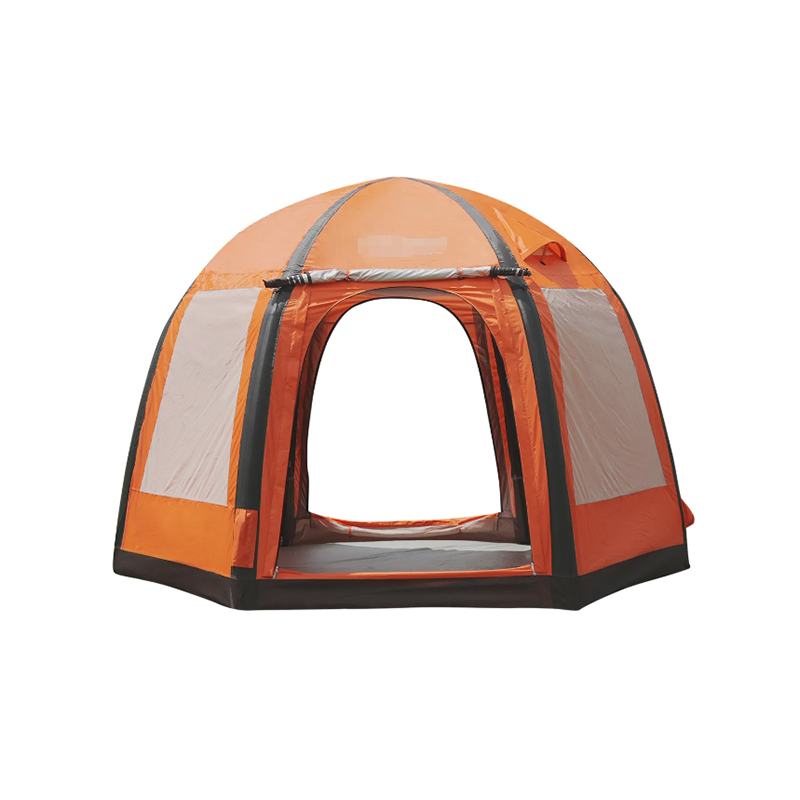
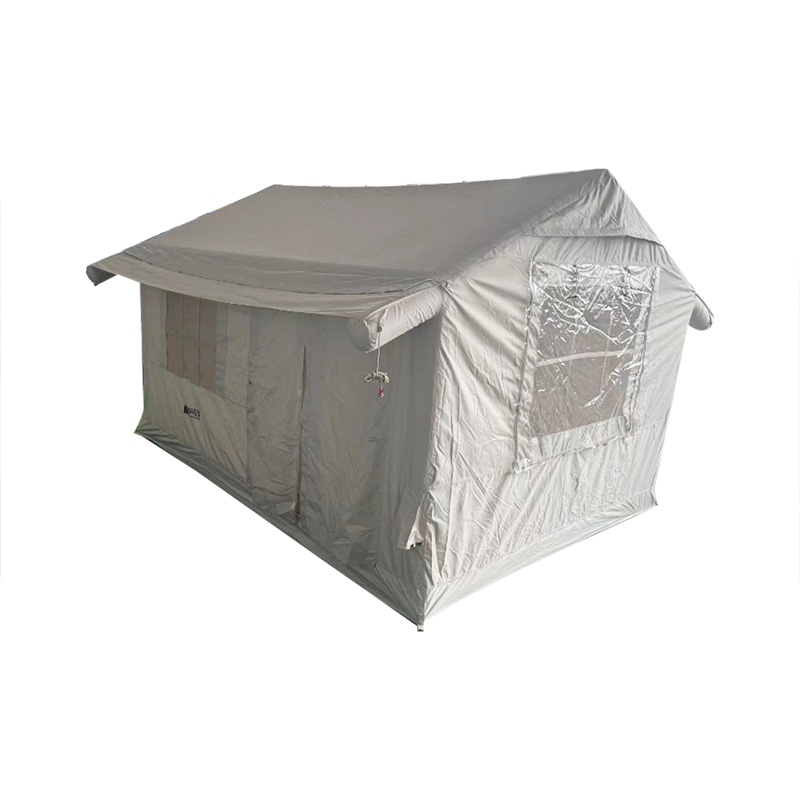
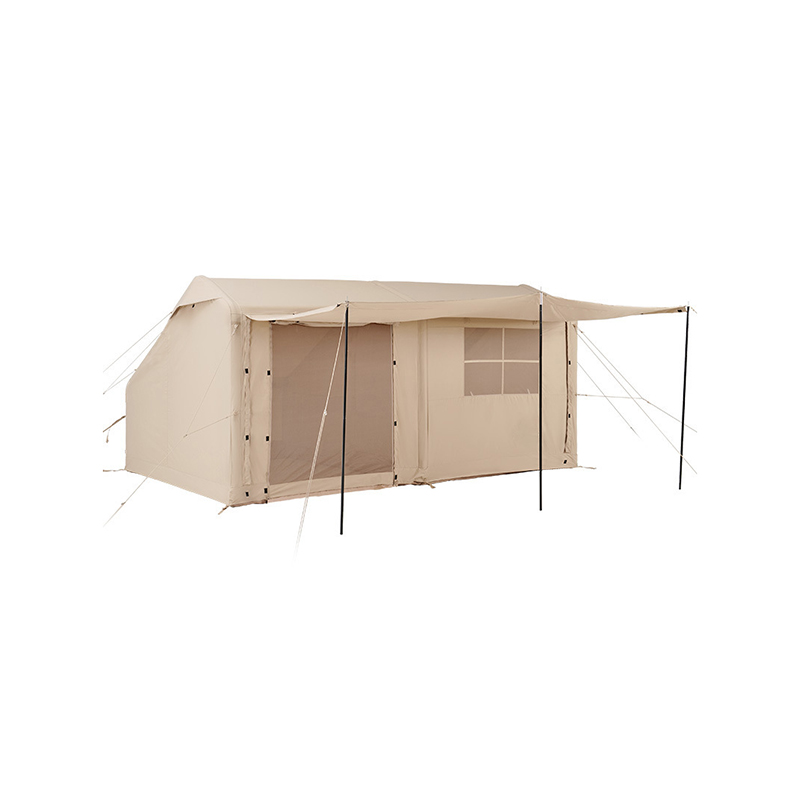
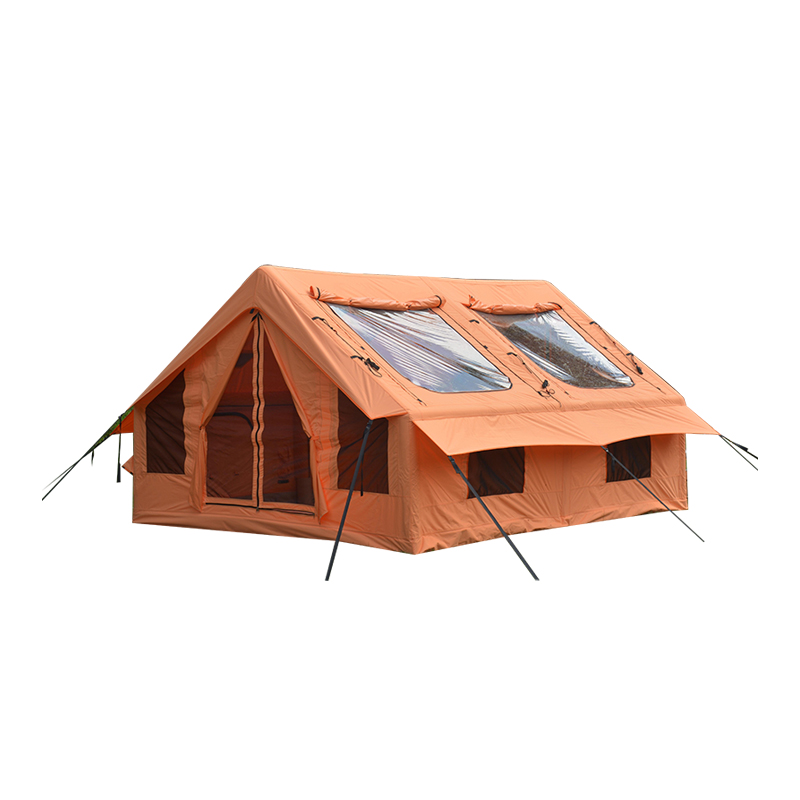
中文简体Hemispherical Inflatable Tent 2 Doors 4 Windows

An Integrated Inflatable Tent typically delivers 15–30% more usable interior floor space than a pole tent with the same external footprint. The reason is straightforward: by replacing rigid corner poles and guy-wire-dependent frames with self-supporting inflatable air beams, the tent eliminates the awkward dead zones that pole tents create in corners and along the walls. For campers, event organizers, or outdoor professionals comparing these two shelter types, that difference is not cosmetic — it meaningfully affects livability, furniture layout, and overall comfort.
In a traditional pole tent, the structural frame runs through the interior living space. Corner poles, central poles, and crossing ridgepoles all occupy positions where a person might otherwise stand, place gear, or set up a sleeping area. Even in a well-designed dome or tunnel tent, the angled walls created by pole geometry mean that large portions of the floor area — technically inside the tent — are too low to sit or stand in comfortably.
As a practical example, a 4-person dome pole tent with a 240cm × 210cm footprint often has a full standing-height area of only around 100cm × 80cm at the center peak. The remaining floor space slopes aggressively toward the edges, limiting usable headroom to roughly 50–60% of the total floor area.
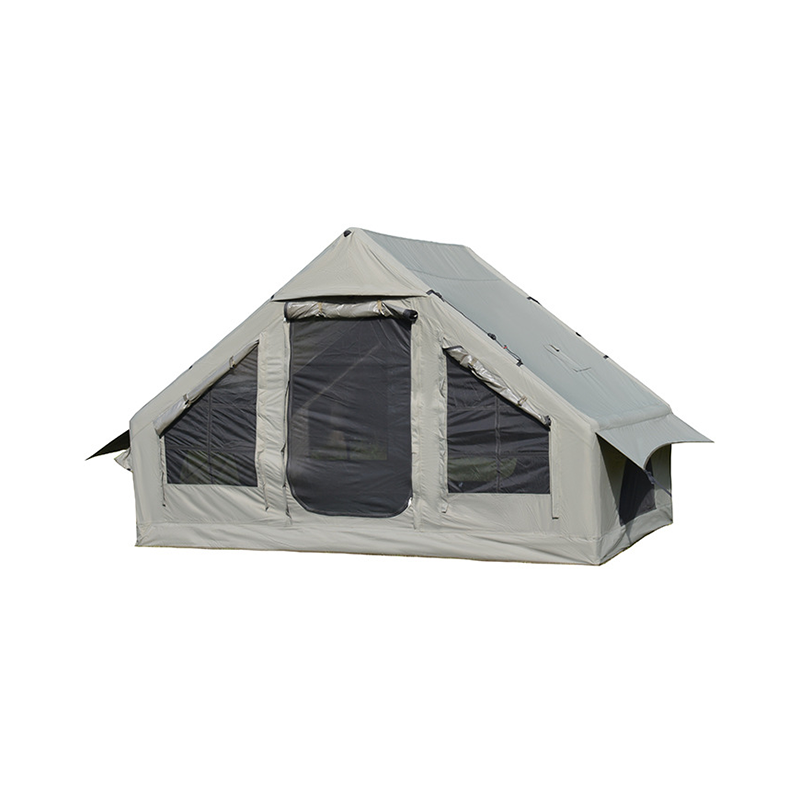
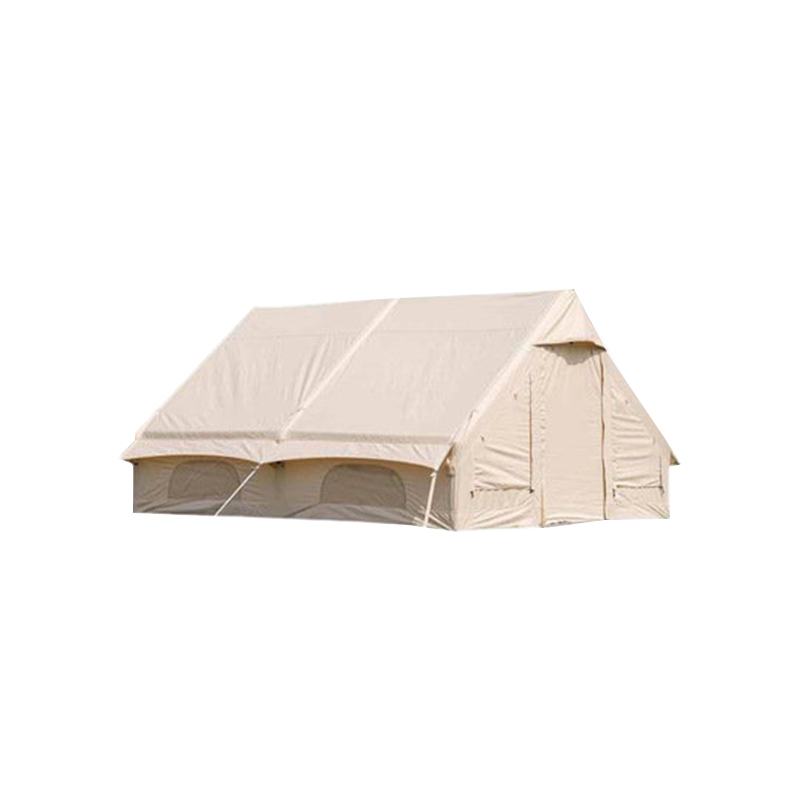
An Integrated Inflatable Tent uses pressurized air beams — typically running along the outer perimeter and over the roof — to form the entire structural skeleton. Because these beams are integrated into the tent fabric itself and follow the outer shell, they free up the interior completely. There are no poles interrupting the floor plan, and the near-vertical walls that inflatable beam geometry creates mean that headroom extends much closer to the tent edges.
A comparable 4-person Integrated Inflatable Tent with the same 240cm × 210cm footprint can maintain full standing height across nearly 80–90% of its floor area, thanks to the near-vertical side walls created by the inflated beam structure. This is a dramatic improvement in functional livability without requiring a larger tent or heavier pack weight.
The table below compares key spatial metrics across tent types sharing an identical external footprint of approximately 240cm × 210cm (a standard 4-person size).
| Metric | Integrated Inflatable Tent | Traditional Dome Pole Tent | Tunnel Pole Tent |
|---|---|---|---|
| External Footprint | 240 × 210 cm | 240 × 210 cm | 240 × 210 cm |
| Peak Height | ~195 cm | ~130 cm | ~150 cm |
| Full Stand-Up Area (% of floor) | ~85% | ~50% | ~65% |
| Interior Obstructions (poles) | None | 2–4 corner/center poles | 2–3 arc poles |
| Wall Angle (approx.) | 85–90° (near vertical) | 45–60° | 60–70° |
| Usable Volume Gain vs Pole Tent | +20 to +30% | Baseline | +10 to +15% |
The absence of interior poles in an Integrated Inflatable Tent has cascading practical benefits that go beyond raw measurements. Here is how the space advantage translates in real use scenarios:
In a 4-person pole dome tent, corner poles often force sleeping bags into awkward diagonal arrangements. In an equivalent Integrated Inflatable Tent, four standard sleeping mats (each 55cm × 185cm) can typically be laid out in a clean two-by-two grid with clearance to spare along the walls — something a pole tent of the same outer size cannot accommodate without overlap.
For event planners using large-format shelters, this distinction is even more significant. A 6m × 9m Integrated Inflatable Tent used as a pop-up exhibition space can accommodate standard 180cm trestle tables along all four walls without any pole interference. A pole frame tent of the same footprint typically loses 1.5–2m² per corner to pole base clearance and angled wall intrusion.
With vertical or near-vertical walls, an Integrated Inflatable Tent allows gear bags, backpacks, and equipment to be stored upright against the walls — an ergonomic advantage that any camper who has wrestled a large pack into a low-angled dome tent corner will immediately appreciate.
It is worth being balanced. Pole tents are not without merit, and there are scenarios where the space trade-off is acceptable or even preferable:
The usable space advantage of an Integrated Inflatable Tent is most meaningful for specific user types. Consider whether you fall into one of these categories:
When evaluating an Integrated Inflatable Tent against a pole tent with an identical external footprint, the inflatable design consistently wins on usable interior volume, headroom distribution, and layout flexibility. The elimination of interior poles combined with near-vertical wall geometry translates to a functionally larger living and working space — without requiring more ground area. For most non-backpacking use cases, this is a compelling practical advantage that justifies both the price premium and the slight added weight of the inflatable system.
If footprint efficiency and interior comfort are priorities — and they should be for anyone spending meaningful time inside their shelter — the Integrated Inflatable Tent is the stronger choice. The pole tent wins on cost and ultralight portability, but loses the interior space contest by a significant and measurable margin.