

 English
 中文简体
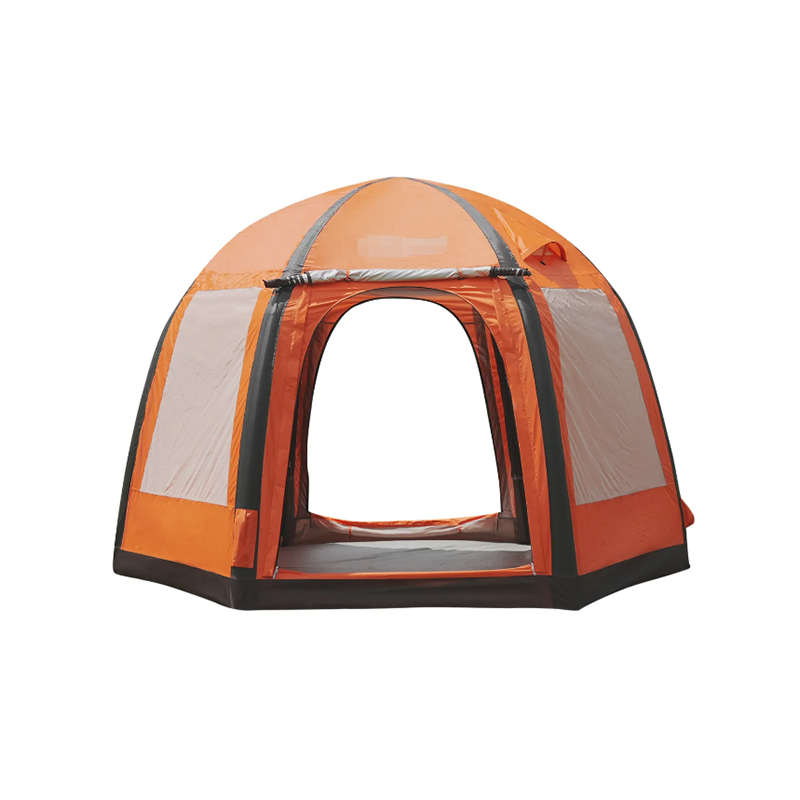
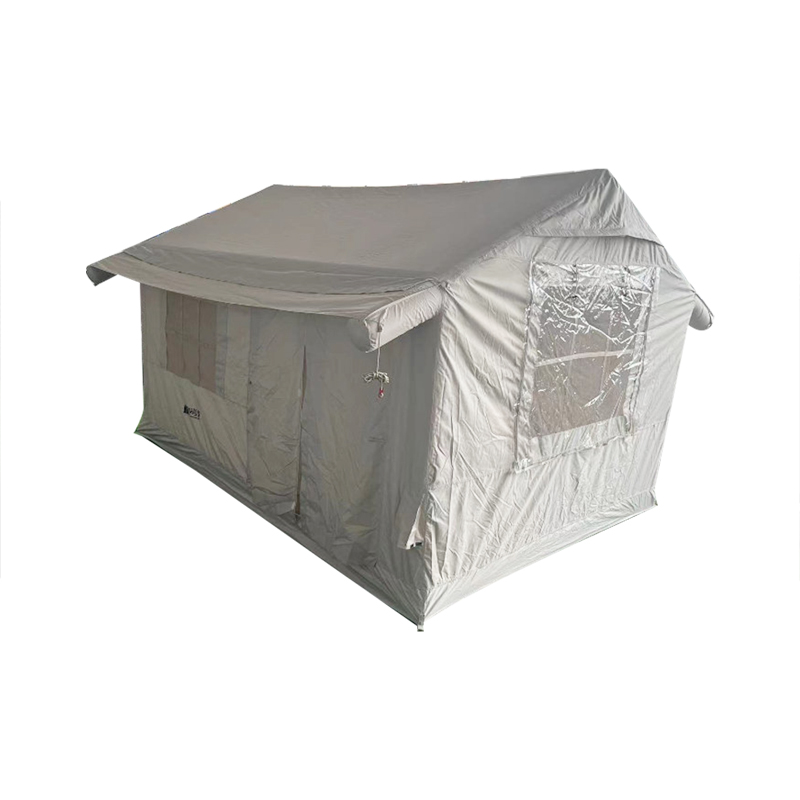
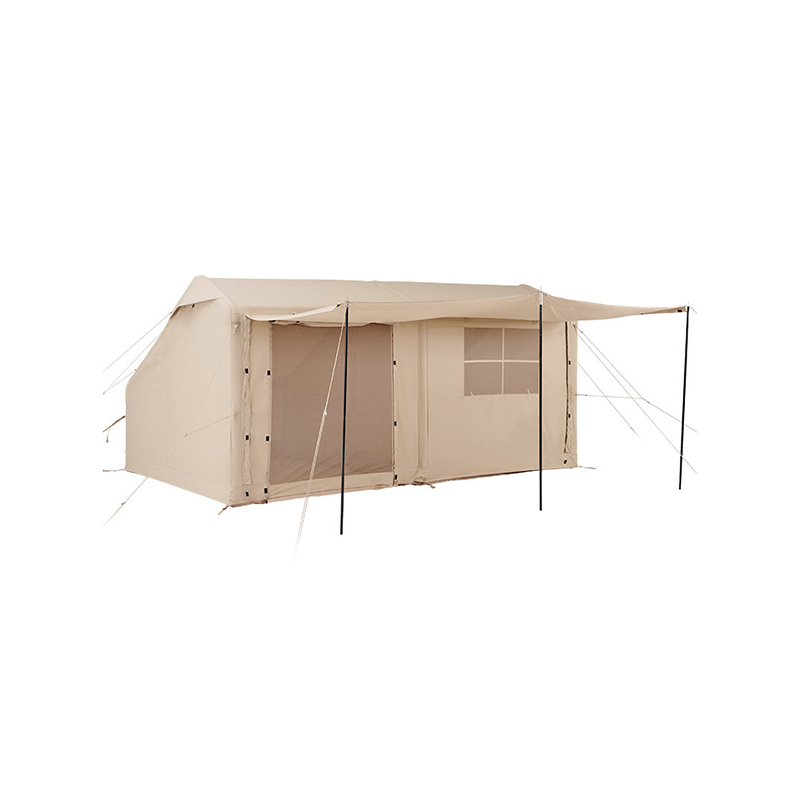
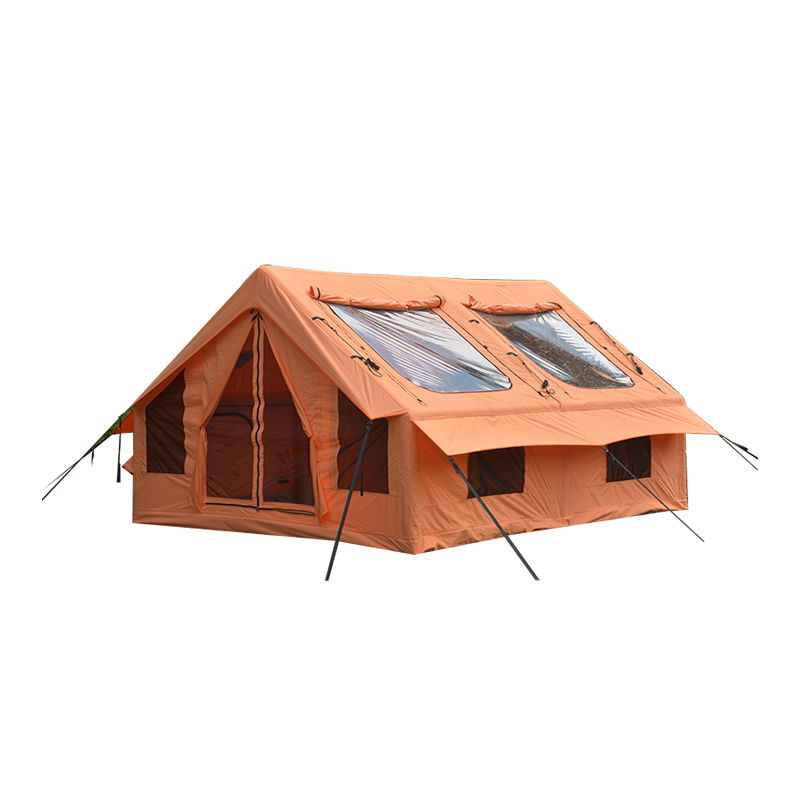
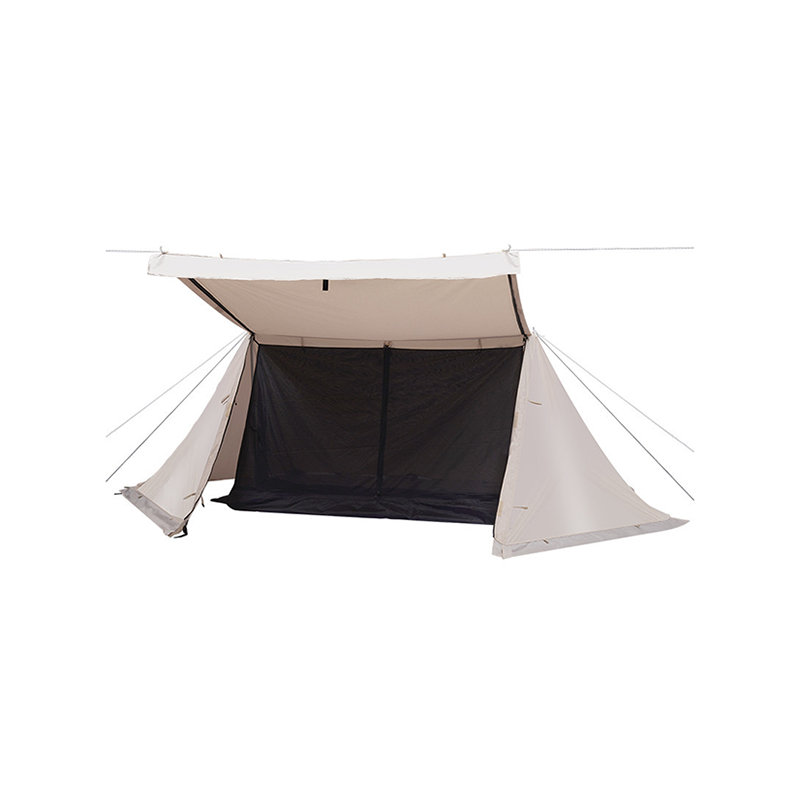
Hemispherical Inflatable Tent 2 Doors 4 Windows

Two hours of daylight left, wind rolling off the lake, and a bag of loose aluminium poles. This is exactly when people search for the easiest tent to put up, and exactly when most product descriptions stop being useful. The catalogue says quick setup. The campsite says otherwise.
Here is the short answer. For raw speed, a quick-set dome with a pre-assembled hub frame is the easiest tent to pitch: 60 to 120 seconds from bag to standing shelter in two- to four-person sizes. Above four people, an air-column inflatable is faster and far less physical, at 4 to 8 minutes with a decent pump and no pole sleeves to thread. Traditional pole tents are the slowest to raise and the easiest to carry, which is why backpackers still use them.
What follows is where those numbers come from, what each mechanism costs you, and how to choose without trusting a stopwatch alone.
Manufacturers quote the fastest possible step and quietly drop the rest. A figure you can actually plan around covers the whole sequence:
Conditions multiply the total. Below 8°C, coated fabric stiffens and valves get awkward through gloves; a steady 20 km/h wind can double the anchoring step on its own. A first pitch is routinely 40 to 60 percent slower than the second, so rental fleets and campsites should judge a tent on its third pitch, not its first.
Take-down belongs in the same equation. A tent that goes up in 90 seconds and takes six minutes of wrestling back into its bag has not saved anyone time across a four-day trip.
The frame is pre-joined, in fibreglass or steel, and the tent opens as one piece — shaken out, or pushed up through a central hub. It is the least physical option and the fastest for small and mid-size shelters. Two-person pop-ups are commonly standing in under a minute; a four-person instant cabin is realistic at 90 to 120 seconds once the corners are pegged.
 Portable Automatic Folding Camping Tent for FamiliesA quick-set 2–4 person tent with fibreglass poles, silver-coated waterproof fly, and compact 3.6 kg carry weight for family trips and park outings.View Product →
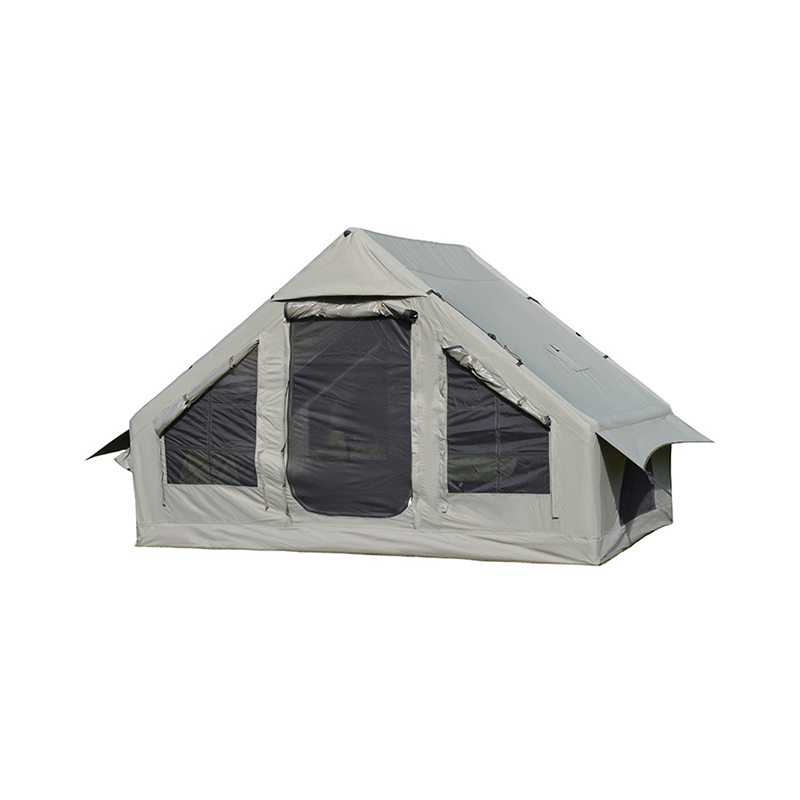
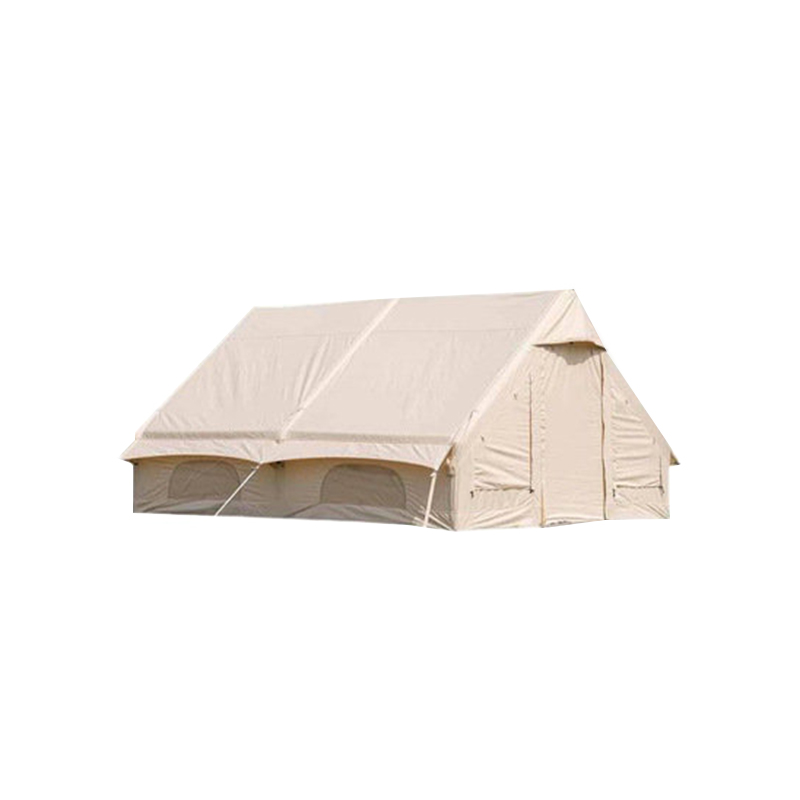
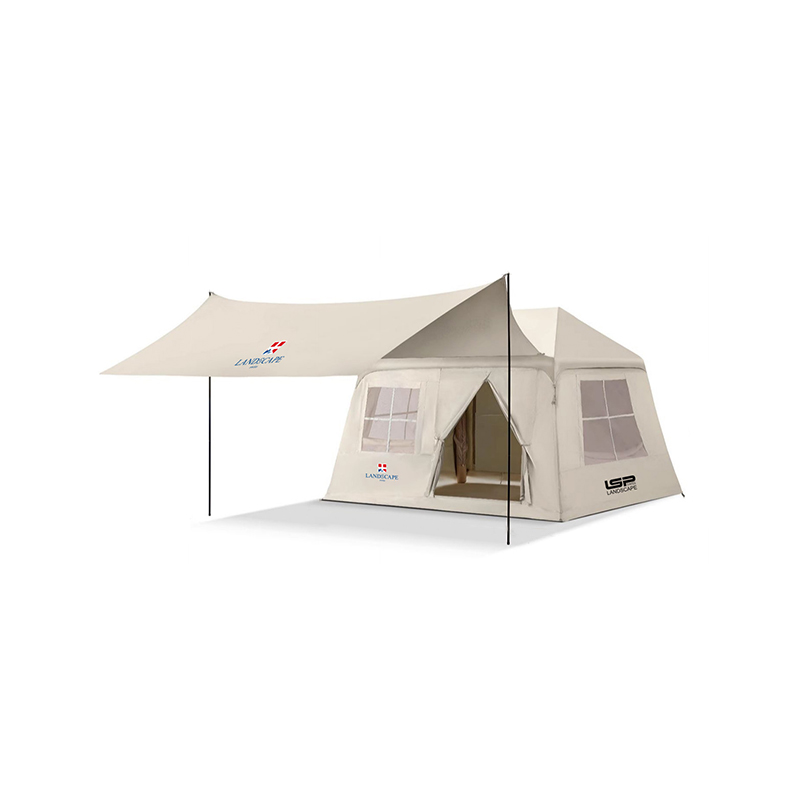
PVC or TPU beams replace poles entirely: one inflation point or a handful on bigger models, a one-way valve, and a hand or electric pump. Setup runs 4 to 8 minutes, most of it spent pumping rather than thinking. The advantage widens as the footprint grows. A six-metre cabin with standing height is a 15 to 25 minute job in poles and a five-minute job in air.
 Inflatable Cabin Tent for Family and Group CampingA 4–6 person inflatable cabin with PVC air beams, wide mesh vents, and included manual pump, offering faster setup than traditional poles for group camps.View Product →
Sleeves or clips, two to four crossings, then the flysheet. Six to twelve minutes for a first pitch, four to six once the sequence is in your hands. Nothing here is difficult, only sequential. In exchange you get the smallest packed volume and the best strength-to-weight ratio, which is why every serious hiking tent still uses poles.
| Mechanism | Realistic pitch time | Packed size and weight | Main weakness | Best suited to |
|---|---|---|---|---|
| Quick-set or pop-up frame | 60–120 seconds | Long package, moderate weight | Awkward repack; needs guy lines in wind | Weekend car camping, festivals, family sites |
| Air-column inflatable | 4–8 minutes | Compact but heavy; pump required | Pump dependency, bladder repair | Large family tents, basecamps, long stays |
| Manual pole tent | 6–12 minutes | Smallest and lightest | Slowest pitch, most steps | Backpacking, hiking, weight-critical trips |
Every fast mechanism trades something, and the trade rarely appears in the headline specification.
Speed is not a feature you buy. It is the result of removing steps that never needed to be there.
Packed length is the most ignored figure on the label. Pop-up and instant tents frequently pack to 110–120 cm, which is longer than the width of many hatchback boots and longer than standard airline baggage limits. Measure the vehicle before falling for a 90-second pitch.
Repack is the second hidden cost. Pop-up tents fold by a twist that has to be learned; done badly, the tent returns to the car as a loose bundle. Budget two to five extra minutes on the final morning, or watch a demonstration before the first trip.
Wind separates good fast tents from cheap ones. A hub frame with four pegged corners and no guy lines will flap and deform in 30 km/h gusts; the same tent with two lines per side stays quiet. Then there is repair: a snapped pole section is a ten-minute field fix with a splint, while a punctured air column means a patch, a deflation and a slow re-inflation. Ask what is in the box.
The fastest tent is only the right tent when its packing suits the way you travel.
Site-based weekends, four to six people, a vehicle within walking distance. A quick-set dome is the obvious pick; if you want standing height and a divider, accept the pump and go inflatable. Look for a full-coverage flysheet and at least two vents, because a fast tent with poor airflow becomes a wet morning.
Rooftop and tailgate designs change what easy means: the tent is already mounted, so pitching becomes unfolding and propping rather than assembling. Setup lands around one to three minutes and the vehicle does the structural work. The trade-off shifts to fuel economy, parking height, and the fact that you cannot drive away with the tent raised.
 Inflatable Hard Shell Rooftop Tent for VehiclesA vehicle-mounted rooftop tent with PVC air columns, 300D Oxford shell, mattress, ladder, and pump for car, SUV, and truck camping.View Product →
There is no shortcut. A 1.5 kg pole tent that takes five practised minutes beats a 4 kg pop-up that takes ninety seconds and ruins your shoulders.
For glamping units, event shelters and seasonal camps the calculation is labour hours multiplied by turnover. A large air-column structure one person can raise in minutes and leave standing for a week wins. Ice fishing and hunting shelters follow the same logic, with shorter occupancy and heavier emphasis on wind and insulation.
A tent you can pitch alone, in wind, without instructions, in under three minutes is the right answer for most buyers. Speed only counts if it still holds on the second night.
If you are sourcing tens or hundreds of units — as a brand, importer or rental operator — easy has to survive scale. Vague claims do not; a written test protocol does.
Air-column tents change with temperature. A tent inflated to full stiffness at 18°C in the morning can feel over-pressured by mid-afternoon at 30°C, and under-pressured on a cold night. A pressure-relief valve, or a deliberately modest initial fill, solves most of it — worth specifying for markets with wide daily swings.
For a walkthrough of the different pitching sequences and who each one suits, this comparison of camping tent setup methods pairs well with the checklist above.
The easiest tent to put up is a quick-set hub or pop-up frame in two- to four-person sizes: fastest to raise, least physical, and simple enough to pitch in the dark. Once a tent needs standing height, a bedroom divider or space for a family, an air-column inflatable wins on total effort even though the clock runs a few minutes longer. Pole tents stay in the conversation for one reason — they are the only category you can carry comfortably.
Weigh the three numbers that actually decide your morning: minutes to a weather-tight pitch, packed length against your vehicle, and minutes to get the tent back in its bag. Choose on the slowest of the three and the tent will feel easy every day of the trip.