

 English
 中文简体
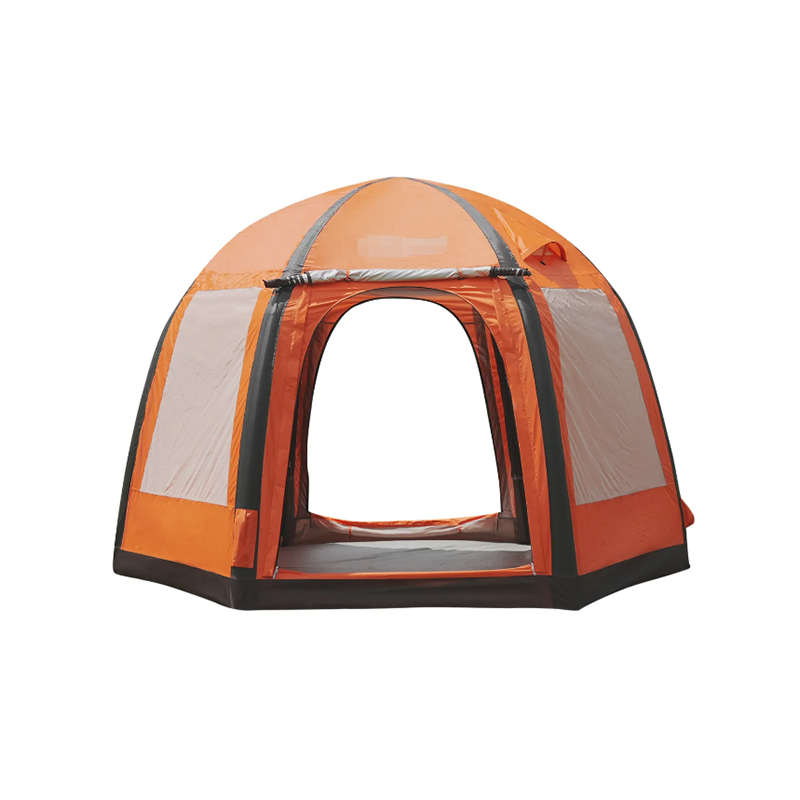
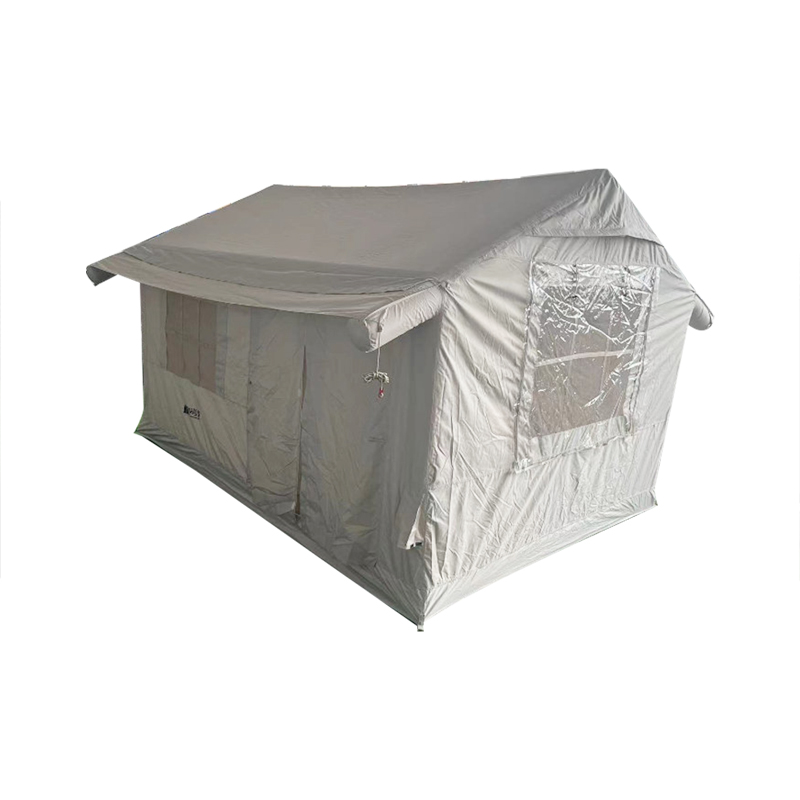
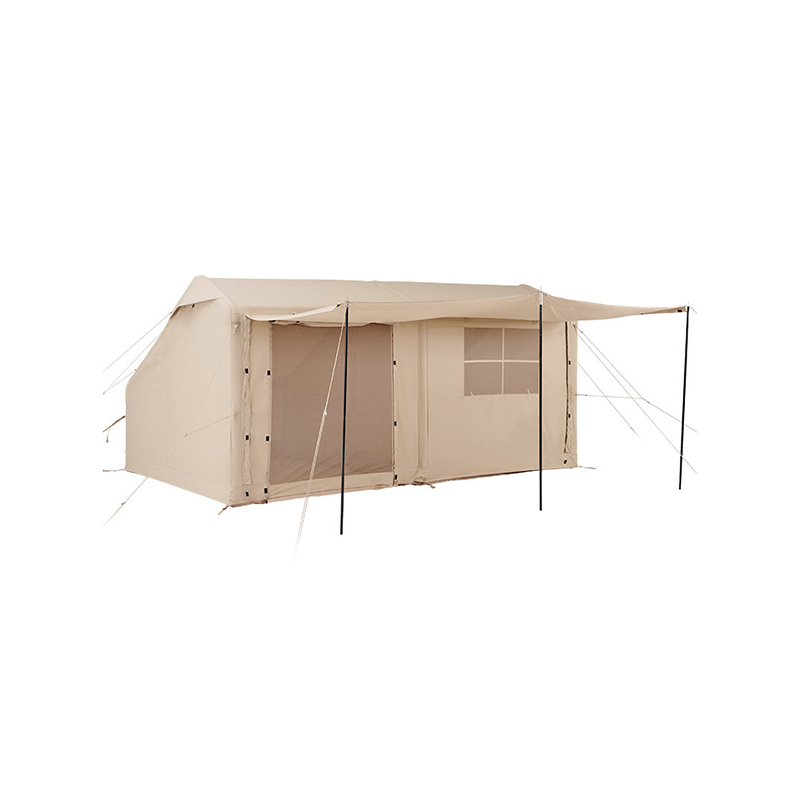
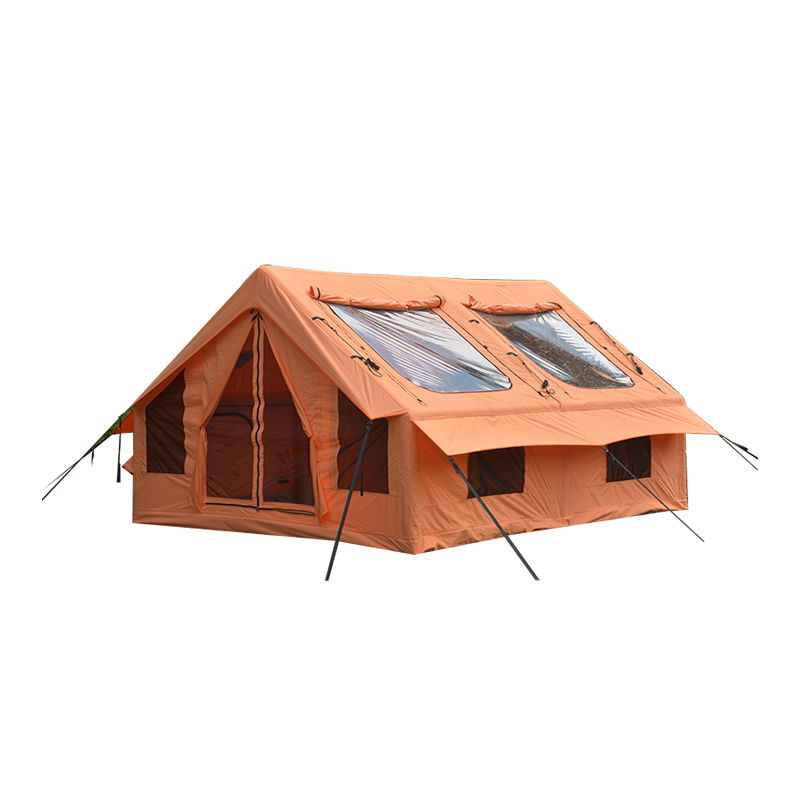
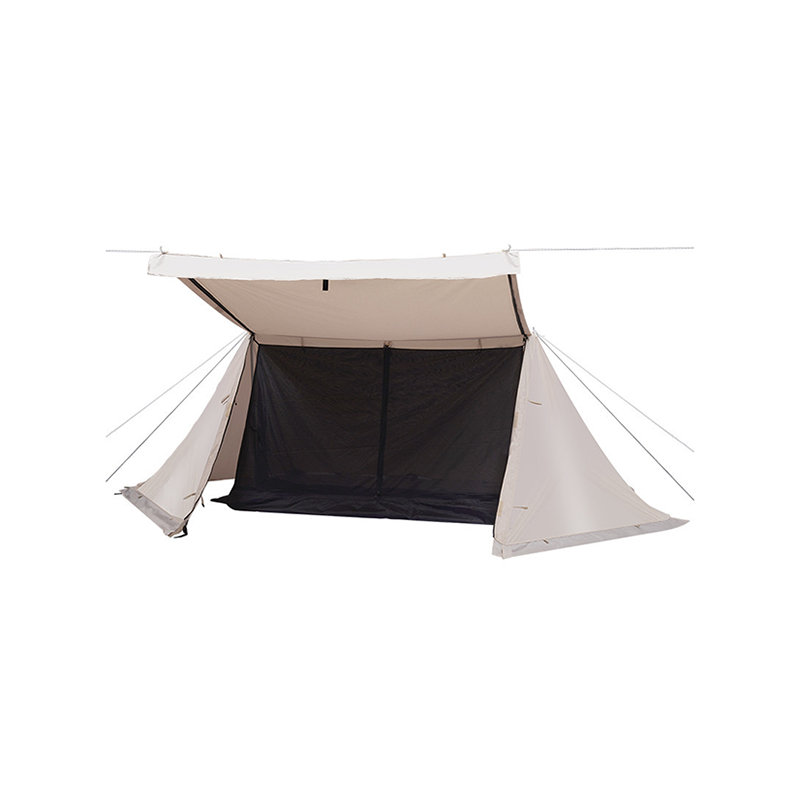
Hemispherical Inflatable Tent 2 Doors 4 Windows

Tent Manufacturing Notes
Vertical walls, welded air columns and one honest pressure figure — a maker's view on choosing a cabin-format inflatable tent that is still upright on the third wet morning.
Three nights into a wet trip, a 6.3 m cabin tent with a single ridge beam starts leaning into the wind. No seam has failed and nothing has torn. The owner inflated the columns by feel that afternoon, and by two in the morning the air inside them had cooled and shrunk. That is usually the whole story behind a tent that "collapses in bad weather".
The short version comes first: on a camping inflatable cabin tent, three things decide whether you sleep well — the diameter and chamber layout of the air columns, the geometry of the walls, and the pressure you actually reach with the pump you brought. Window counts and colour options matter far less, though they take up most of the sales page.
What follows unpacks those three, then covers footprints, condensation, layout, and the checks worth making before anyone orders a sample or a container.
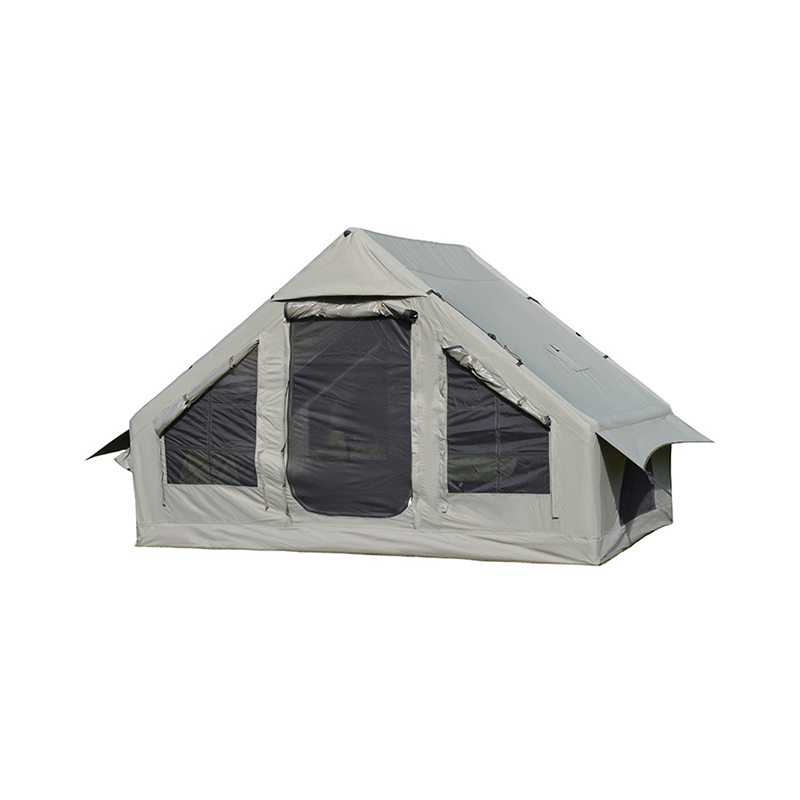
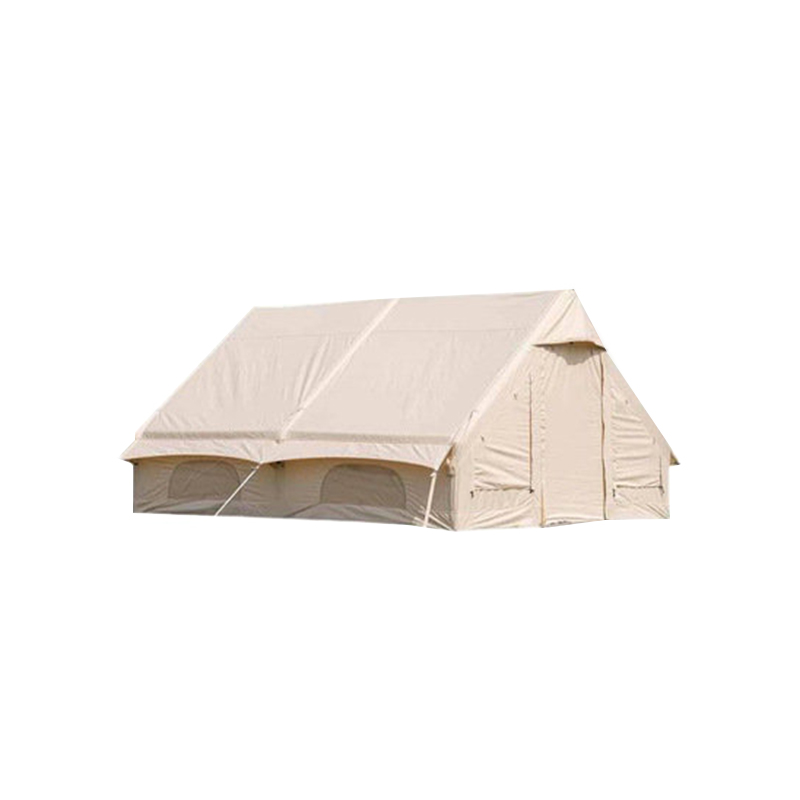
A cabin tent is defined by geometry, not by a label. The side walls rise almost vertically for most of their height, the ridge runs high across the full width, and the footprint reads as a rectangle rather than a dome. Standing height covers the majority of the floor instead of a narrow strip down the middle.
Compare a 4 m dome with a 4 m cabin. The nominal size is the same; the interior is not. In a dome, headroom sits where the cots cannot go. In a cabin, a cot, a table and a pair of boots sit side by side without anyone crawling.
Two adults on cots, plus a table and two packs, need roughly 2.5 m by 2.5 m of clear floor and 1.8 m of headroom at the cot line. A 12 m² cabin delivers that comfortably. A 12 m² dome often does not, which is why two tents with identical numbers can feel like completely different products.
This is the format behind our own inflatable cabin, where door, window and canopy options are listed against each footprint.
Air columns are the frame. They are made from PVC tarpaulin or TPU-coated fabric and welded with high-frequency heat rather than stitched, because needle holes at a stressed seam are where leaks begin. Welded seams are also why a damaged column can usually be patched instead of re-stitched.
Chambers count as much as material. One continuous tube running the length of the tent loses the whole structure to a single puncture. A frame divided into three to five linked chambers will sag instead of drop, and can normally be walked back to camp.
Column diameter sets stiffness, and stiffness rises far faster than the diameter itself. Moving from a 100 mm column to a 150 mm column is not a fifty per cent improvement; it is a different class of structure. Weight and packed size grow with it, which is the balance every manufacturer is working with.
Working pressure is a number, not a feeling. Air-column tents generally run between 0.4 and 0.6 bar depending on material and weld quality — tight enough that the fabric drums, controlled enough that seams are not stressed. Confirm the figure with the maker, and make sure the pump has a gauge that can show it.
Pressure is a specification, not a feeling. If the gauge cannot show the number, the tent cannot hold it.
The engineering notes on this site explain how PVC air columns contribute to a tent's structural integrity in more detail.
Model sizes describe the span of the air-column structure, not the exact interior floor area. Capacity ratings assume sleeping bags laid edge to edge, while real camping involves packs, a stove and a wet dog.
| Model span | Interior character | Sleeps comfortably | Typical use |
|---|---|---|---|
| 4 m, single door | One open room, two cots | 2 | Couples, weekend trips |
| 4 × 4.1 m dome | Sloped shoulders, central headroom | 2 to 3 | Small families, short stays |
| 6.3 m cabin | Vertical walls, cot plus table | 3 to 4 | Family camping, site rental |
| 7.5 m cabin | Room for two clear zones | 4 | Longer trips, small groups |
| 12 m² air tent | Bedroom plus living area | 4 to 6 | Group camping, extended stays |
| 12 m villa or lodge | Panoramic roof, full standing height | 6 and up | Glamping sites, events |
Before committing, ask for a dimensioned drawing and mark your own cots on it. The gap between a 6.3 m and a 7.5 m cabin is often 40 cm of usable width exactly where it is needed — and it is invisible in marketing photography.
Condensation, not rain, is the most common complaint about inflatable cabins. Two adults sleeping in a closed tent release roughly half a litre to a litre of water each overnight through breathing and perspiration. Water that cannot leave lands on the inner wall, and then in your sleeping bag.
Look for a low vent at each end and a high exit at the ridge or under the shell of the canopy. TPU windows are not vents. A cross-flow path from floor level to roof level moves far more moisture than a single roof opening.
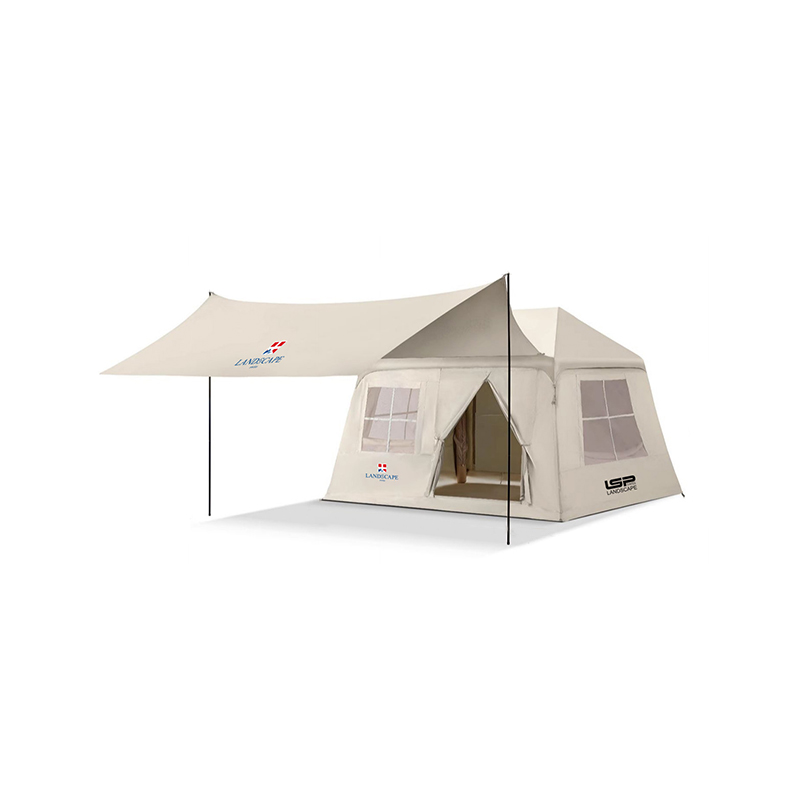
A canopy over the door does more than shade the entrance: it keeps rain off the zip line and gives low vents a sheltered place to draw air. The inflatable tent with canopy shows how that porch is built into the air-column frame rather than hung on afterwards.
The biggest layout decision is whether sleeping is separated from living. A divided cabin keeps wet gear, cooking and boots in one zone and bedding in another, which matters on trips longer than two nights. One open room gives more usable space per square metre, but everything shares it.
Where a divider is part of the design, as in the one-bedroom-one-living-room inflatable tent, it should be removable so the same footprint can serve as a single open room when the weather is good.
For importers, camps and rental fleets, the useful specification looks nothing like a consumer listing. It should carry material type and weight, column diameter and chamber count, weld method, valve type, working pressure and the pump model that reaches it, zipper size, groundsheet specification, pack dimensions, pack weight, and whether a repair kit or spare column ships with each unit.
Ask for three things before sampling: a dimensioned drawing, the tested working pressure, and the pack weight in kilograms. Those three answer most of the questions that come back from the field.
As a manufacturer, Nordic Kamping builds cabin-format tents in this geometry, and the full PVC air column inflatable tent range runs from 4 m single-door models to 12 m villa formats with TPU windows and panoramic roofs.
A large PVC cabin tent is a vehicle-carried product. Packed weights between 25 and 40 kg are normal for 12 m² models, and two people can have one standing in 15 to 25 minutes with a proper pump — faster than a pole tent of the same volume, slower than a small dome.
Check campsite rules before booking. Some sites limit tent footprints, others charge by ground area, and hard or sloping pitches may rule out a rectangular cabin altogether. Inflate on the groundsheet, never on gravel.
A camping inflatable cabin tent is a simple bargain. You trade some packed weight for a great deal of standing room, and you accept that the structure depends on air staying where it was put. Buy the columns and the geometry first — diameter, chambers, welded seams, working pressure — and the layout second.
Nordic Kamping Outdoor Products builds cabin-format inflatable tents in Ningbo, from 4 m single-door cabins to 12 m villa and lodge formats, in PVC and TPU air-column constructions, with OEM and ODM programmes for brands, camps and importers.