

 English
 中文简体
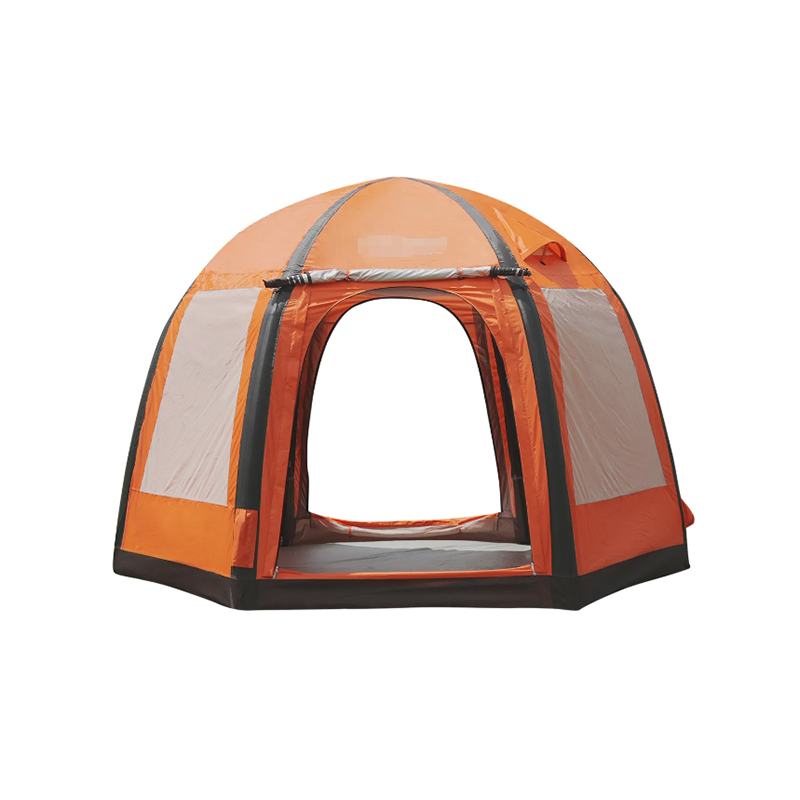
中文简体Hemispherical Inflatable Tent 2 Doors 4 Windows

One shell, two defined living spaces, and no pole bag to wrestle. What this category actually delivers, where it falls short, and how to judge one before you buy.
It is 6:40 p.m., light rain has just started, and two children are standing in the mud asking when dinner happens. With a traditional pole tent, that evening is already lost: 25 to 40 minutes of assembly, poles bowing in the wind, someone holding a sleeve upright. With a 2-room inflatable camping tent, the realistic answer is that the shelter is standing within ten minutes and the kettle goes on first.
That is the core conclusion of this guide: for drive-in family camping, a two-room inflatable shell is less a luxury than the difference between a tent used twice a year and one used every long weekend. Below we break down what the two rooms really are, how air columns behave, which layout suits which family, and the specifications that separate a shelter that lasts from one that sags by August.
Most models share one inflated shell with a fabric divider that can be zipped in, moved or removed. In practice that gives you three ways to live in it: two enclosed bedrooms at either end, one bedroom plus a lounge or open veranda zone, or a single open-plan space once the divider comes out. The shell does not change; the divider decides the floor plan.
The bedroom-plus-lounge arrangement is the configuration families choose most often. Children sleep behind a real fabric wall while adults keep a light on, play cards or dry wet clothes a few steps away. In households with a dog, the second room doubles as a mudroom that keeps sleeping bags away from wet paws and sandy boots.
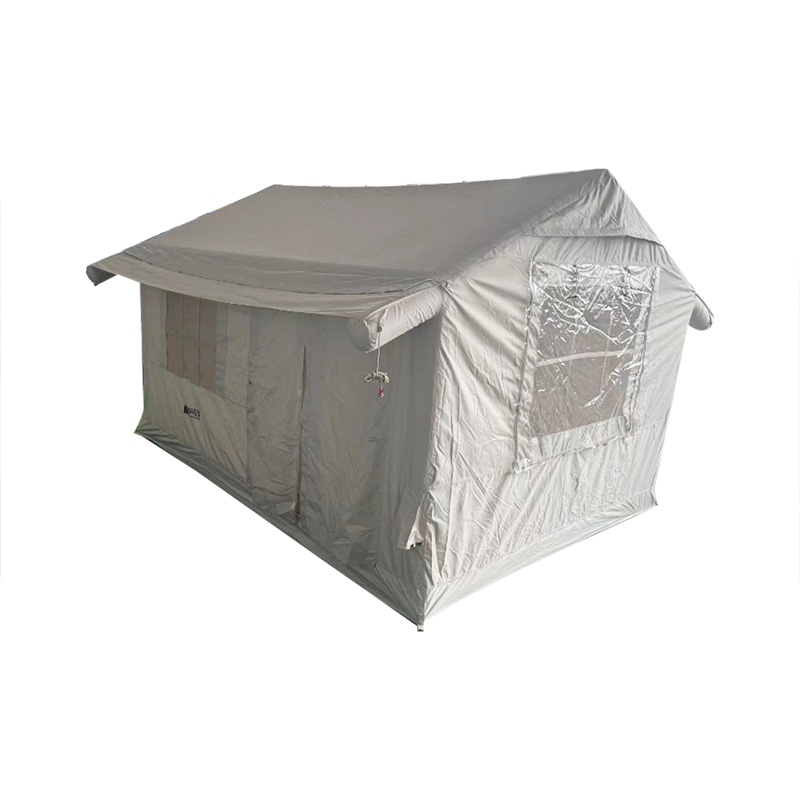
 One Bedroom, One Living Room Inflatable TentThis two-room inflatable tent separates a private bedroom from a lounge area, letting kids sleep apart while adults relax. With TPU air poles and quick pump setup, one adult can pitch it alone in minutes.View Product →
Instead of a pole set, the structure hangs on inflatable columns, which are PVC or TPU bladders enclosed in tough fabric sleeves. An electric pump does the work in three to eight minutes on family-sized models; a hand pump adds a few more. Nothing needs threading, and one adult can complete the entire job alone, which is precisely the point.
Columns also behave differently in wind. A rigid pole flexes once and holds the stress; an air column gives in a gust and springs back. Pressure is the variable that matters: family-sized PVC columns commonly run around 0.3–0.6 bar, a figure printed near the valve, and the label rather than your feel for firmness should decide when you stop pumping. For a deeper technical explanation, see our note on how air columns contribute to structural integrity and stability.
Because the shell stays constant, choosing a model is really choosing a floor plan. The table below summarizes how the three configurations differ in daily use.
| Configuration | Works best when | Trade-offs |
|---|---|---|
| Two enclosed bedrooms | Two families share a site, or teenagers want their own door | Least shared floor space; the lounge effectively moves outdoors |
| Bedroom plus lounge or veranda | Children sleep early while adults keep an evening living zone | Privacy depends entirely on where the divider sits |
| Open plan, divider removed | Gear storage, cots for guests, bad-weather play space | No light or sound separation between zones |
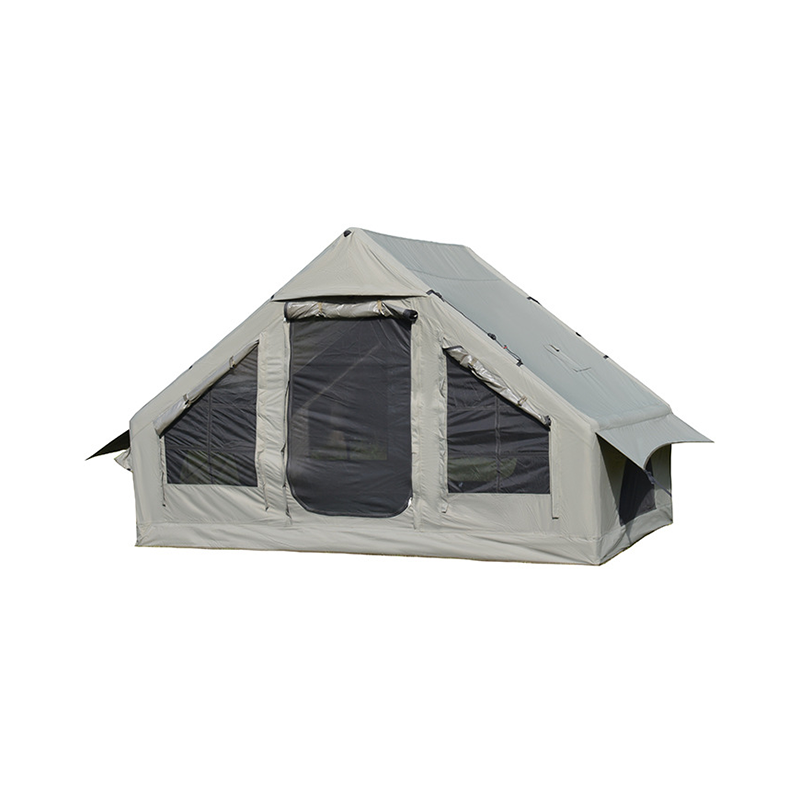
Roof geometry matters as much as the divider. Gable-ended designs keep standing height close to the walls, so the usable floor area is genuinely usable, while tunnel shapes shed wind best when pitched nose into the breeze. Both forms exist in one-bedroom-one-living-room versions, so the layout you prefer does not lock you into a shape.
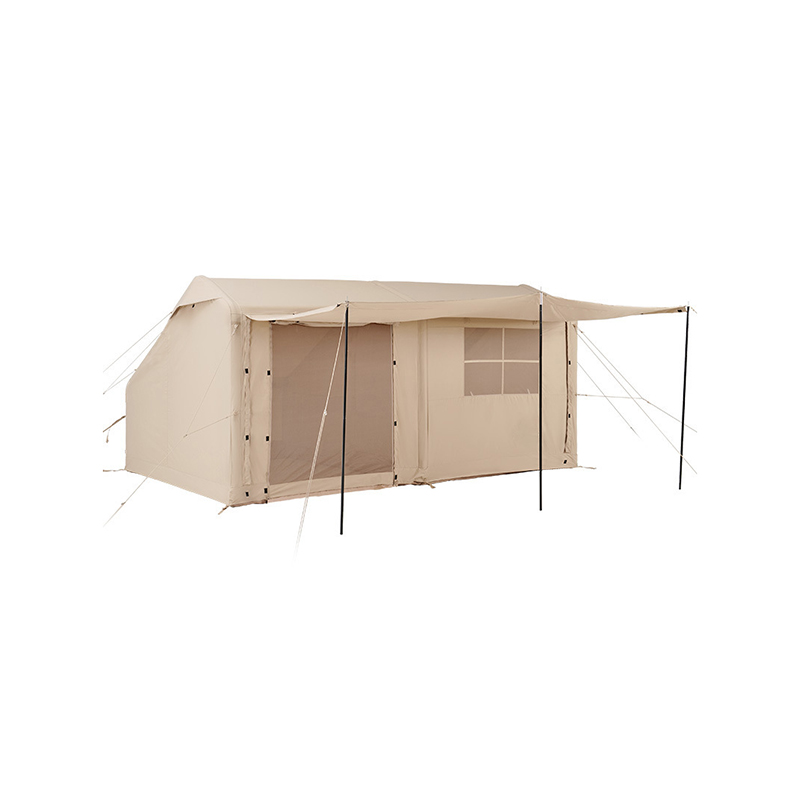
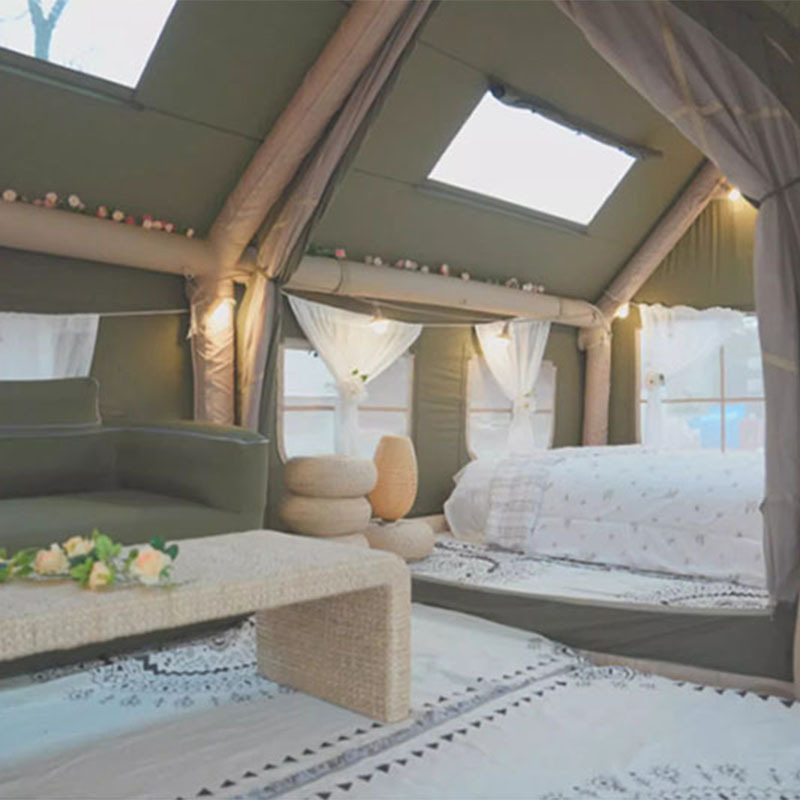 Inflatable Gable Tent with One Bedroom and One Living RoomA gable-ended inflatable tent that keeps standing height close to the walls, making its two-room layout genuinely usable. It combines the wind-shedding roof shape families may prefer with the bedroom-plus-lounge arrangement.View Product →
Plan on ten to twelve minutes the first time and five to seven once the routine is familiar, including pegging. The sequence matters more than raw speed.
Four people breathing plus one kettle of steam produce a surprising amount of moisture. The two-room layout helps here more than most buyers expect: the bedroom can be closed down for the night while the lounge stays ventilated, so cooking damp and wet socks never share air with sleeping bags. Look for mesh inner doors, high rear vents and clear windows made of TPU, which stays flexible and transparent in the cold where thin PVC film fogs and cracks.
Single-skin panels will drip as the inside air cools after sunset; a double-layer or well-vented design moves that moisture out instead of onto your pillows. This is one spec worth reading twice, because it shapes every morning of the trip.
Kids asleep behind the divider, kettle on in the lounge, and the whole thing stood up before the rain turned serious. Some might call it glamping.
— the recurring summary among families who switch to air tents
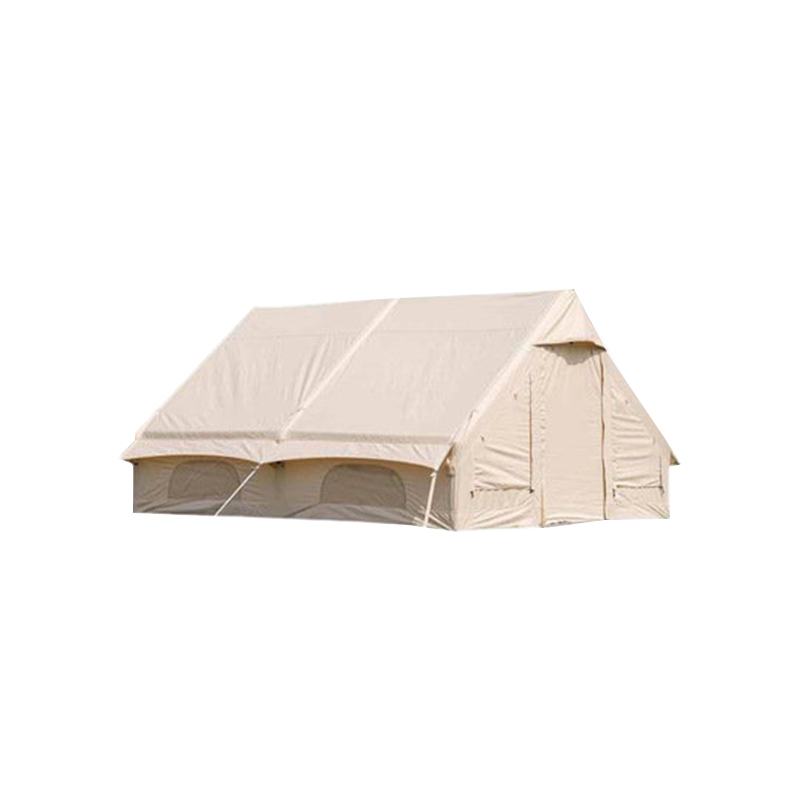
Work from floor area, not berth numbers. A 12-square-metre two-room shell comfortably sleeps two adults and two children and still leaves a compact lounge, while the same area sold as a six-person open dome feels tighter because there is nowhere to stand except between the beds. A peak height near two metres, a weight class of roughly 18–35 kg for PVC-column family shells and a packed size that fills one or two duffel bags complete the practical picture: this is car camping equipment, and it is honest about that. To see how these figures scale across the category, browse the complete PVC air column inflatable tent range, from compact dome models to 12 m multi-room layouts.
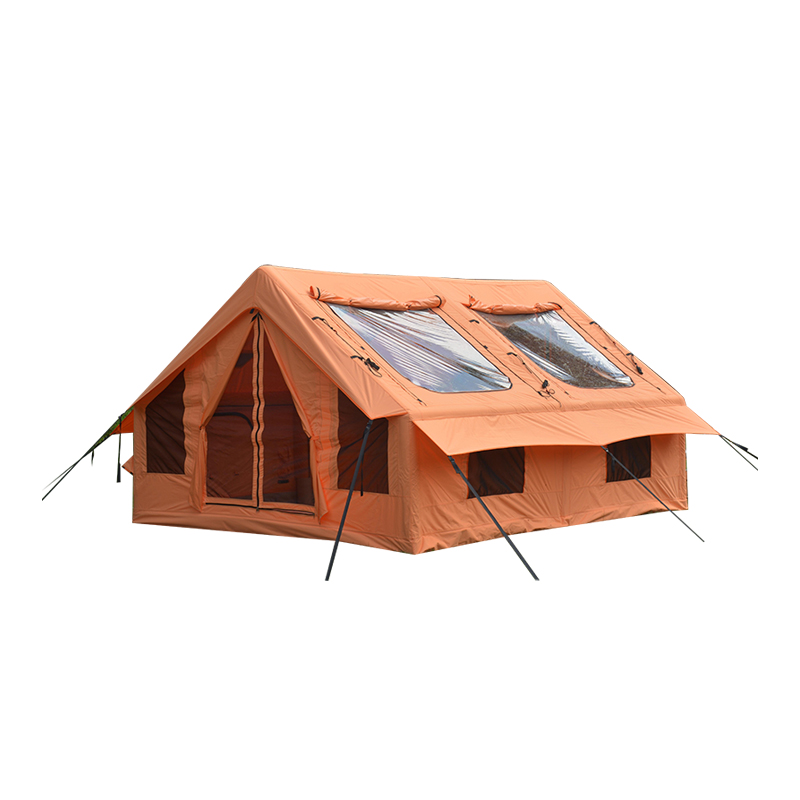
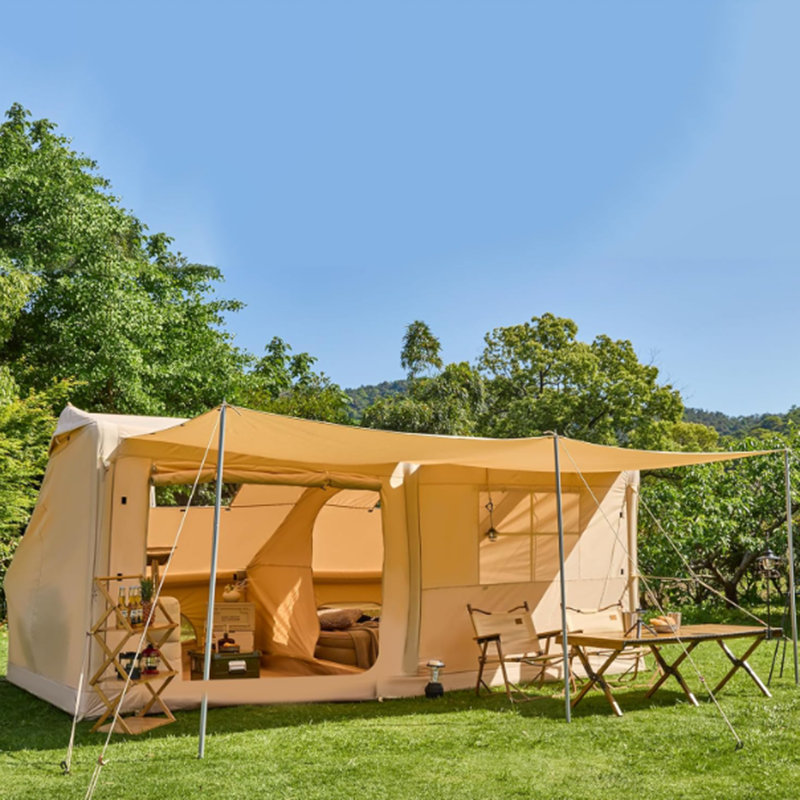 12m² One Bedroom One Living Room Inflatable TentThis 12-square-metre model sleeps a family of four with room left for a compact lounge. A 13 cm PVC air column, 600D waterproof Oxford fabric, and large windows make it practical, comfortable car camping equipment.View Product →
Then compare the details that determine lifespan:
Buy one if you arrive by car, camp with children or pets more than a few nights a year, or run a campsite where every minute of guest setup is a service cost. Two-room inflatables have become a core line for glamping and family-camping programs precisely because turnover is fast and instructions are short. Skip the category if you carry the tent on your back: at 18–35 kg, no amount of engineering turns a two-room shell into a backpacking tent.
This is also the segment where our own production is concentrated. As a tent manufacturer supplying outdoor brands through OEM and ODM programs, we build two-room inflatable shells on a shared air-column platform, with buyers adjusting the divider layout, window configuration and fabric specification rather than starting from zero. The questions procurement teams ask first are the same ones listed above: pressure retention, bladder material and seam construction. That convergence is useful to note, because a tent specified well enough for a brand's warranty department is specified well enough for your family.
The verdict comes down to usage math. If the tent travels by car and gets pitched more than three or four nights a year, a 2-room inflatable camping tent pays for itself in the first season of shorter setups, drier mornings and children who fall asleep behind their own wall. Judge candidates on layout flexibility, column specification and ventilation, in that order, and remember the quiet truth of the category: the best tent is simply the one that is standing, with the kettle on, before the rain gets serious.